

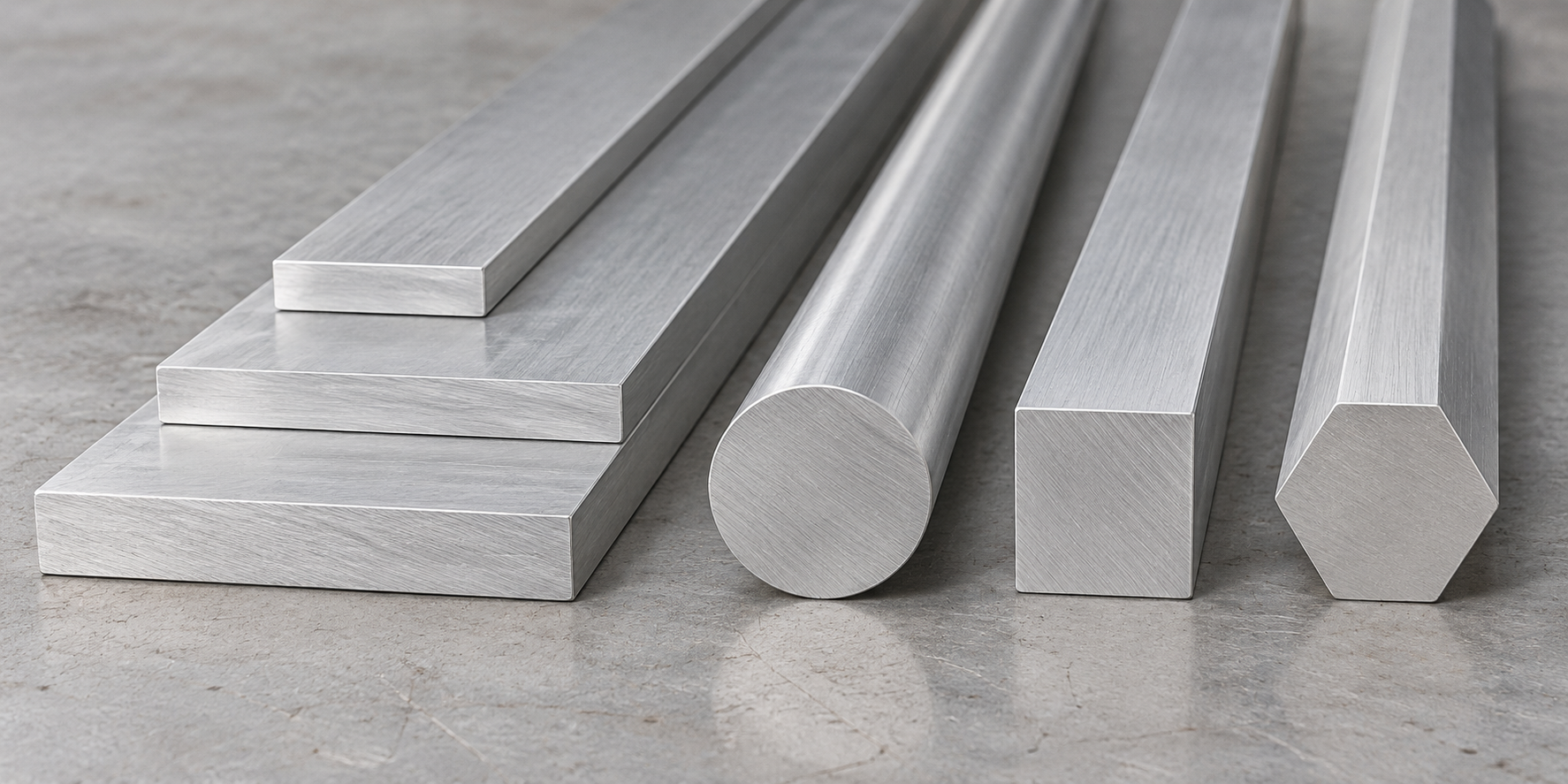
Aluminum bar stock comes in flat, round, square and hex profiles. The best choice depends on your finished part, alloy, temper and machining needs. If you only need raw lengths, compare metal distributors. If you need finished components, Xproto’s CNC machining team can review your drawing and quote the part.
What is aluminum bar stock?
It is solid wrought aluminum supplied in standard cross-sections. Buyers specify the alloy, temper, profile, size, cut length and quantity. A cut bar is not a finished part: it may still need milling, turning, drilling, deburring, finishing and inspection.
Choose the right bar shape
- Aluminum flat bar: Often suits brackets, rails and narrow plates. Specify thickness and width.
- Aluminum round bar stock: Often suits turned shafts, pins and spacers. Specify diameter.
- Square or hex bar: Can reduce machining on parts with matching profiles. Check available alloy, temper and size.
Leave enough material for machining. A saw-cut end or stock surface may not meet the finished drawing. For a wide, thin part, compare flat bar with plate before ordering.
Which aluminum alloy should you choose?
- 6061 aluminum bar stock: A versatile starting point for many CNC parts. Confirm the required temper, such as 6061-T6.
- 7075 aluminum bar stock: Consider it when the design requires higher strength. Check temper, cost and corrosion conditions.
- 2024: Used for strength- and fatigue-sensitive designs. Confirm corrosion protection.
- 2011: Often chosen for easy machining of small turned parts. Do not assume it suits welded designs.
Do not substitute an alloy or temper without engineering approval. T6 and T6511 are different conditions, not decorative finishes. Ask for a material certificate if your project needs traceability.
What affects cost?
Raw aluminum bar stock pricing depends on alloy, temper, profile, size, quantity, cutting, certification and freight. A finished-part quote also reflects setups, tool access, tolerances, holes, threads, surface finish and inspection. A cheaper bar can cost more overall if it creates extra machining or waste.
What should your CNC machining RFQ include?
- 2D drawing and 3D CAD file, if available
- Approved alloy and temper, or permission to suggest an alternative
- Finished dimensions, critical tolerances and quantity
- Surface finish, inspection and traceability requirements
- Delivery destination and target date
Xproto can assess whether bar stock is a practical starting form for your finished part. We confirm material availability, lead time and price against the actual drawing; this page is not a live raw-bar inventory listing.
Frequently asked questions
Where can I buy aluminum bar stock?
For raw lengths or cut blanks, compare a metal distributor’s alloy, temper, sizes and shipping terms. For a ready-to-use machined component, send a drawing for a manufacturing quote.
Is 6061-T6 the same as 6061-T6511?
No. Both use 6061 alloy, but the temper designations differ. Specify the condition approved for your part.
Should I use flat or round bar?
Match the starting profile to the finished geometry. Flat bar often suits brackets; round bar often suits turned parts. The drawing and machining allowance determine the final choice.
Request a custom aluminum-part quote
Send Xproto your drawing, alloy, temper and quantity. Request a custom aluminum CNC quote for a finished-part review.