

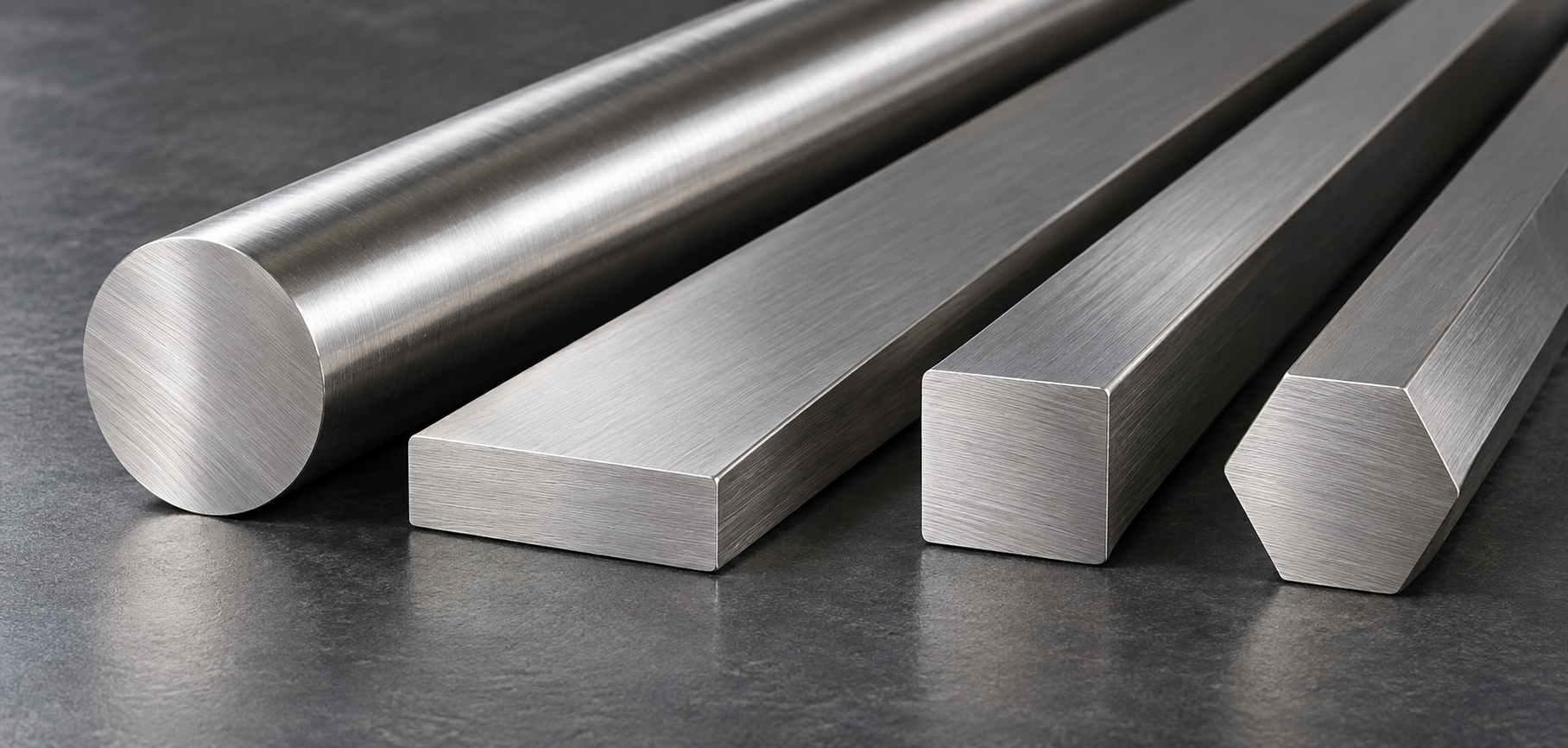
Stainless steel bars are common starting stock for shafts, fittings, brackets, fasteners and precision components. Buyers can choose round, flat, square or hex profiles in grades such as 303, 304, 316 and 17-4 PH. The right purchase depends on more than the price per kilogram: grade, size, stock condition and machining requirements all affect the finished part.
If you need unmachined lengths, compare a metal distributor’s inventory and cut-to-length service. If you need a ready-to-use component, Xproto’s CNC machining service can review your drawing and quote the complete part.
Which stainless steel bar shape fits your part?
- Stainless steel round bar: A practical starting form for turned shafts, pins, sleeves and threaded components. Specify diameter and cut length.
- Stainless steel flat bar: Often suits brackets, rails and mounting plates. Specify thickness, width and length.
- Square bar: Useful for blocks and components with several flat faces. Specify the across-flat dimension.
- Hex bar: Can reduce material removal on fittings and parts with wrench flats. Specify the across-flat size.
Do not assume the nominal stock surface meets the finished drawing. Saw-cut ends, straightness, surface condition and machining allowance need review, especially for tight tolerances or cosmetic faces.
303, 304, 316 or 17-4 PH: how do you choose?
- 303 stainless steel bar: Consider it for turned parts where machinability is a priority. Its corrosion and welding behavior differ from 304; confirm suitability for the environment.
- 304 stainless steel bar: A versatile choice for many general-purpose components. It is often the starting point when no more demanding corrosion or strength requirement applies.
- 316 or 316L stainless steel bar: Often selected when chloride exposure or welding requirements call for it. The grade is not immune to corrosion in every marine or chemical environment.
- 17-4 PH stainless steel bar: Consider it when the design calls for higher strength. Specify the required heat-treatment condition because properties depend on it.
Choose the grade against the actual service environment and drawing. Do not substitute 304 for 316, or one 17-4 PH condition for another, without engineering approval.
What to specify when buying stainless steel bars
A useful raw-bar RFQ identifies the grade and material specification, profile, diameter or cross-section, length, quantity and required stock condition. State whether you need hot-finished, cold-finished, peeled, ground or another surface condition. If traceability matters, request a mill test certificate and define the documentation you need before ordering.
For a machined part, also send a 2D drawing and 3D model if available. Mark critical dimensions, surface finish, threads, inspection requirements and any passivation or other post-processing. The starting bar should leave enough stock for workholding and cleanup without creating needless waste.
What affects the price of stainless steel bar parts?
Raw stock cost depends on grade, cross-section, size, length, quantity, finish, certification and freight. Finished-part cost also includes machine time, setups, tool wear, tolerances, inspection and post-processing. A cheaper bar may raise the total cost if it requires extensive machining or a material change creates a performance risk.
Compare suppliers on the delivered, inspected component when that is what your project actually needs. Ask whether the quotation includes material certification, finishing and inspection records.
Why send a stainless steel bar drawing to Xproto?
Xproto reviews custom CNC-machined components rather than advertising a live catalogue of raw bar stock. Share the part drawing, target grade, quantity and application. We can assess the starting form, machining route and quotation requirements. Material availability, achievable tolerance, lead time and price are confirmed for the specific project.
Frequently asked questions
Are stainless steel bars and rods the same?
The terms often overlap in purchasing. Use the exact profile, dimensions, grade and standard in your RFQ instead of relying on the name alone.
Is 316 stainless steel always better than 304?
No. 316 can offer better resistance in some chloride-containing conditions, but it usually costs more. Choose based on exposure, design requirements and lifecycle cost.
Can I buy a finished part directly from bar stock?
Yes. A machine shop can start with suitable bar stock and produce a finished component. Send the drawing so the shop can confirm material, machining allowance, inspection and finish.
Get a quote for stainless steel CNC parts
Ready to source a custom component? Send your drawing, grade, quantity and delivery requirements to Xproto. Request a stainless steel CNC machining quote.