
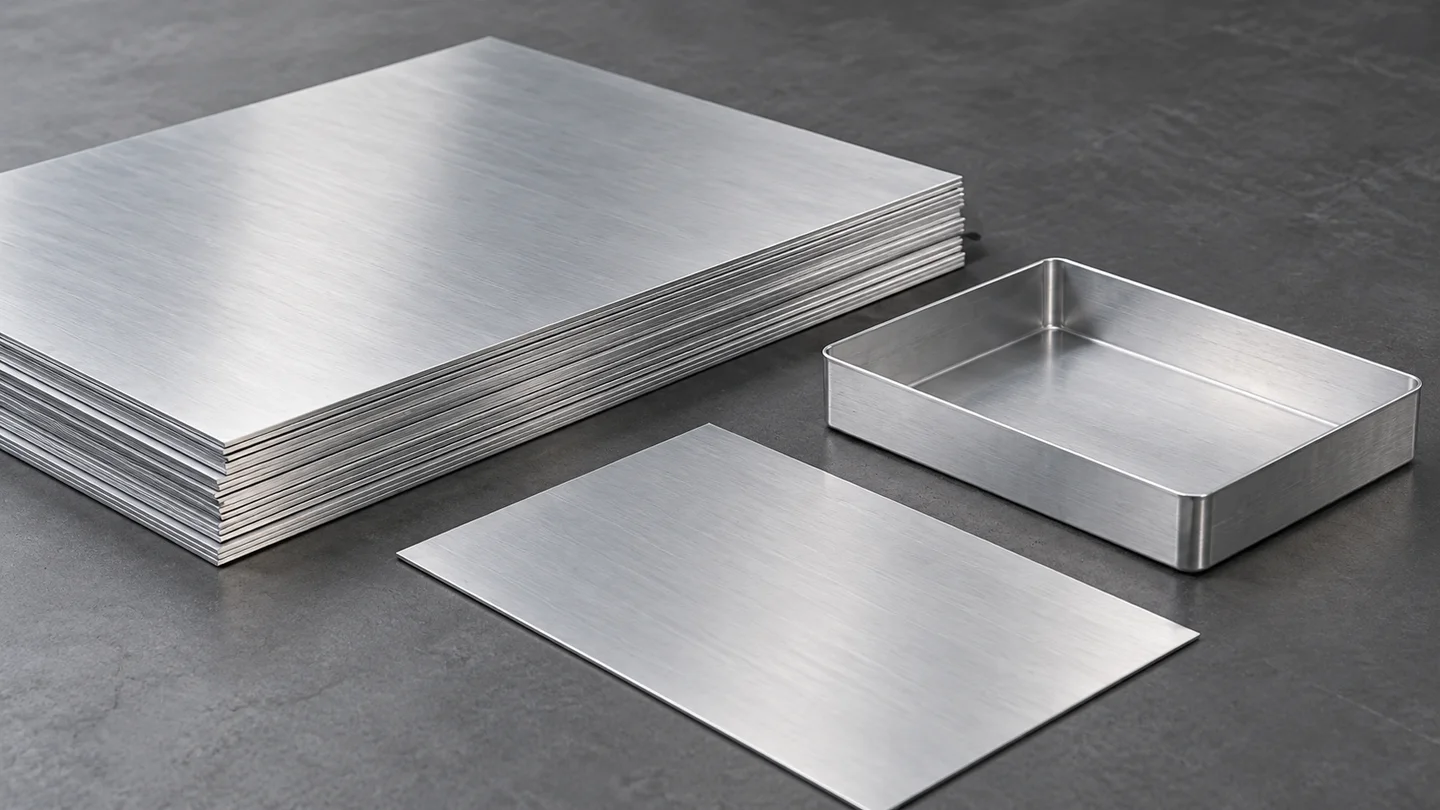
3003 aluminum sheet is a practical option for formed panels, covers, trays and general sheet metal parts. Its appeal is the combination of low weight, good formability and atmospheric corrosion resistance. Before buying, specify the temper, thickness, sheet size and finish, then compare the cost of the complete part.
For a custom component, send your drawing to Xproto’s sheet metal fabrication service. We can review the material choice, cutting and bending requirements, and prepare a project-specific quotation.
What is 3003 aluminum sheet?
3003 is a wrought aluminum alloy with manganese as its main alloying addition. It is non-heat-treatable: cold working raises its strength, while annealing softens it. Common uses include appliance parts, decorative trim and fabricated sheet metal components.
Choose it when forming matters more than high structural strength. Confirm suitability for the actual loads, chemicals and exposure in your application.
3003-H14 or 3003-O: which temper fits?
- 3003-H14 aluminum sheet: Strain-hardened to a half-hard condition. It is a common choice for general fabrication that needs a balance of strength and formability.
- 3003-O: The soft, annealed condition. Consider it for demanding forming operations, subject to the finished part’s strength requirements.
The temper affects forming and mechanical properties. Specify it on the drawing and purchase order; approve any proposed substitution before production. A supplier’s typical property value is not a substitute for the required material specification.
Specify thickness and cut-to-size dimensions
State thickness in millimeters or decimal inches rather than relying only on a gauge number. For example, 0.040 inch is approximately 1.02 mm, and 0.063 inch is approximately 1.60 mm. Define which unit controls the drawing.
For raw sheets, include width, length, thickness tolerance, flatness needs and quantity. A 4-by-8-foot sheet describes the stock format; a finished panel still needs its own dimensional tolerances. For 3003 aluminum sheet cut to size, also specify edge quality and protective film requirements.
Sheet thickness varies within the applicable tolerance. Discuss tight fits and flush assemblies before purchasing material.
3003 vs 5052 vs 6061 aluminum sheet
- Choose 3003 for many readily formed, moderate-strength sheet components.
- Compare 5052 when a formed component needs higher strength or a more demanding corrosion-resistance review.
- Compare 6061 when structural or machining requirements lead the design. Review the temper and bend geometry carefully, especially for tight bends in T6 material.
Compare the exact alloy, temper and product form. A thicker sheet or a stronger alloy may change bend tooling, part weight and total cost. Engineering approval should guide the final selection.
From 3003 sheet to a finished part
A custom part may need profile cutting, holes, bending, deburring, joining and finishing. The drawing should show bend angles, inside radii, hole locations and critical dimensions. The forming review should consider thickness, temper, rolling direction and the available tooling.
If the design includes welding, account for distortion and reduced strength near welds in work-hardened material. Identify visible faces, grain direction and any coating or color requirements. A finish sample can help confirm appearance before a repeat order.
What affects 3003 aluminum sheet pricing?
A raw-sheet quote depends on thickness, dimensions, temper, quantity, cutting, surface condition, documentation and freight. For finished components, also compare material yield, bend count, setups, joining, finishing and inspection.
A small prototype order spreads setup costs across fewer parts. Repeat production may allow more efficient nesting and processing. Compare quotes against the same drawing revision and scope, including packaging and delivery terms.
What to send for an Xproto quotation
- 2D drawing, plus a 3D model or DXF profile if available
- 3003 alloy, approved temper and sheet thickness
- Quantity, bend details and critical tolerances
- Required finish, visible faces and surface protection
- Material certificate and inspection requirements
- Delivery destination and requested date
Xproto can review custom parts made from 3003 aluminum sheet. Availability, production lead time and price are confirmed against your project requirements.
Frequently asked questions
Can 3003 aluminum sheet be bent?
Yes. It has good formability, but the achievable bend depends on temper, thickness, bend radius and tooling. Request a forming review for tight bends.
Can 3003 be hardened like 6061-T6?
No. 3003 gains strength through cold working, rather than the precipitation-hardening route used for 6061-T6.
Should I buy raw sheets or finished parts?
Buy raw sheets when your team handles fabrication. For parts ready for assembly, request a quotation that includes cutting, forming, finishing and the agreed inspection.
Request a 3003 aluminum sheet part quote
Send your drawing, temper, thickness and quantity. Request a custom sheet metal quote from Xproto to review the next production step.