

CAPABILITIES · ALUMINUM EXTRUSION
Custom Aluminum Extrusion Services
From a custom profile to a finished component. Xproto combines aluminum extrusion with cutting, CNC machining and surface finishing to deliver parts made for your application.
- Custom cross-sections and standard-profile options
- Alloy, temper and finish matched to your drawing
- Cutting, CNC milling, drilling and tapping
- One quotation for your finished-part requirements
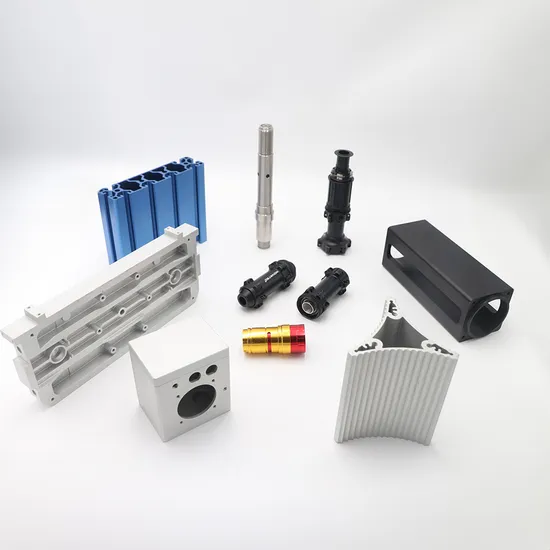
Product examples shown for reference.
Order Aluminum Profiles That Fit Your Project
Choose a custom die or an existing section, then specify the operations needed to make it ready for use.
Xproto’s aluminum extrusion services cover custom and standard-profile sourcing, cut-to-length preparation, CNC machining and surface finishing. Send the profile cross-section and finished-part drawing for an alloy, tooling, tolerance and delivery review.
A Cross-Section Designed Around Your Part
When an off-the-shelf shape adds weight, assembly work or unnecessary machining, a custom extrusion can combine several functions in one continuous profile.
Send the cross-section, wall dimensions and finished length. We review die feasibility, alloy selection and the machining allowance for features added after extrusion.
- Solid, hollow and semi-hollow profile concepts
- Heat sinks, channels, rails and enclosure sections
- Mounting features and assembly interfaces
- Color, cosmetic surfaces and finish requirements
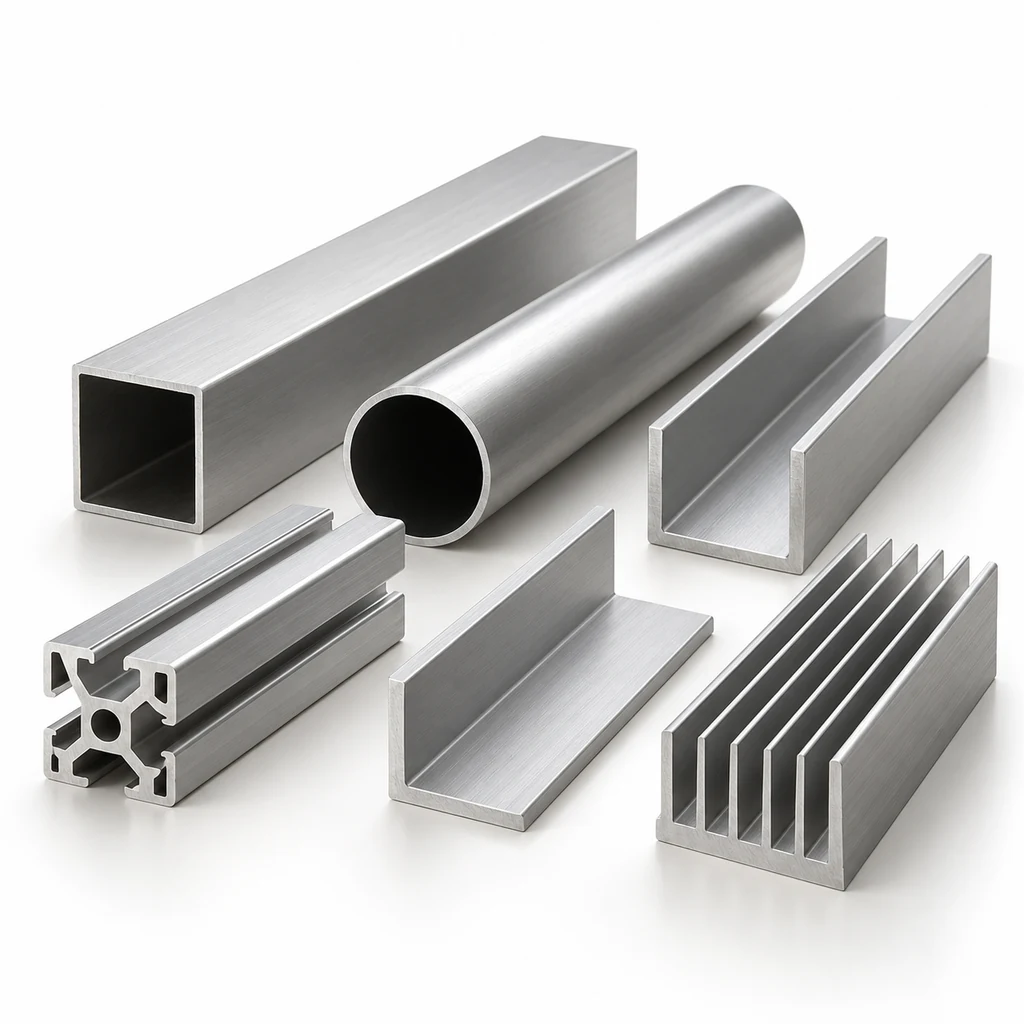
Illustrative profile geometries; final dimensions and alloy are defined by your drawing.
Start With an Existing Profile Where It Fits
A standard tube, bar, angle, channel or framing section may avoid a new die when its geometry meets your requirements. We can review available profiles and the secondary operations needed for the finished part.
- Round and rectangular tubes
- Angles, channels and bars
- T-slot and framing-profile options
- Cut lengths, drilled holes and threaded features
Profile availability, minimum quantities and suitability are confirmed in the quotation.
Aluminum Extrusion Materials
Compare common alloy options. Tell us the load, environment, surface requirements and required temper—not just the alloy number.
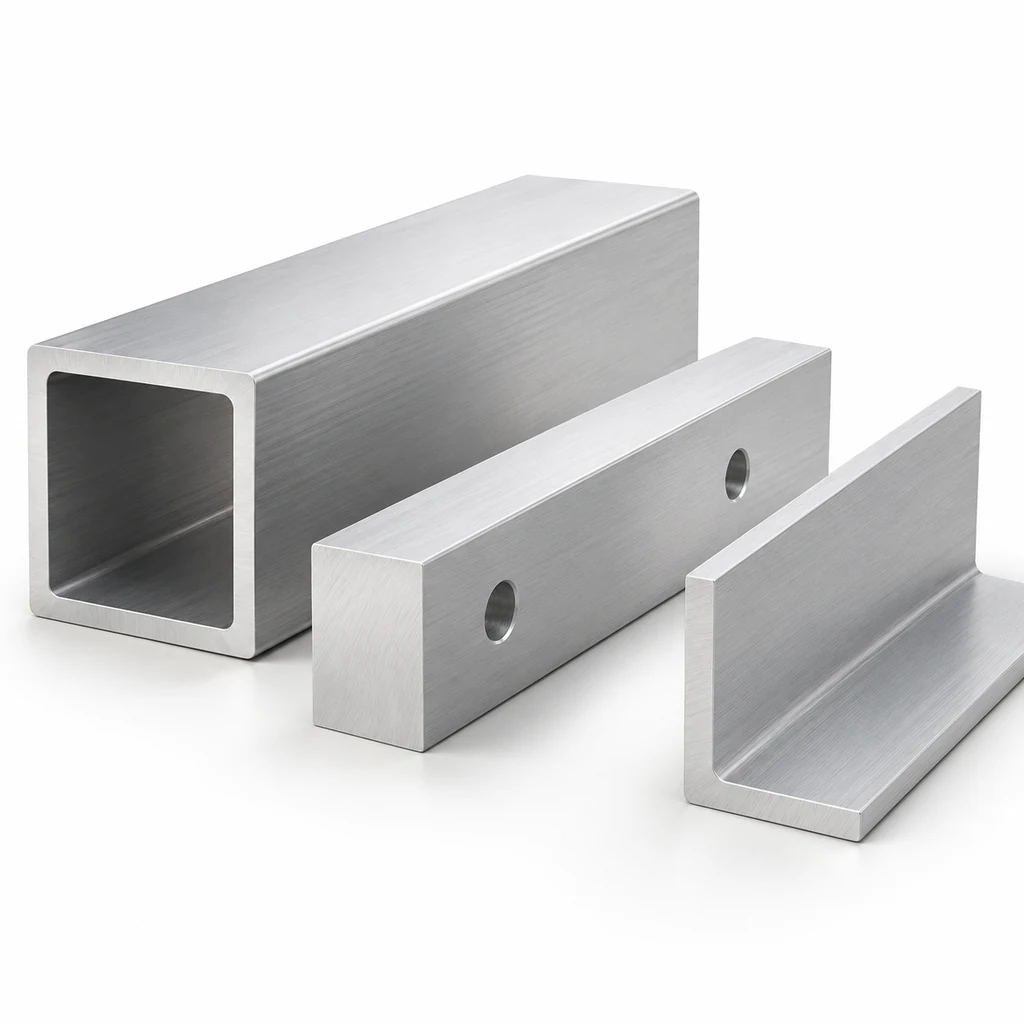
Illustrative 6061 application shapes. Alloy and temper must be specified; appearance alone does not identify the material.
ALLOY SELECTION
6061 Aluminum
A practical option for structural and machined components where strength matters. Specify the required temper as well as the alloy.
Key considerations
Strength and machinability
Typical applications
Equipment supports, machined rails, mounting parts and structural components.
Specification note
T6 is a common specified condition; confirm the required mechanical properties and finish.
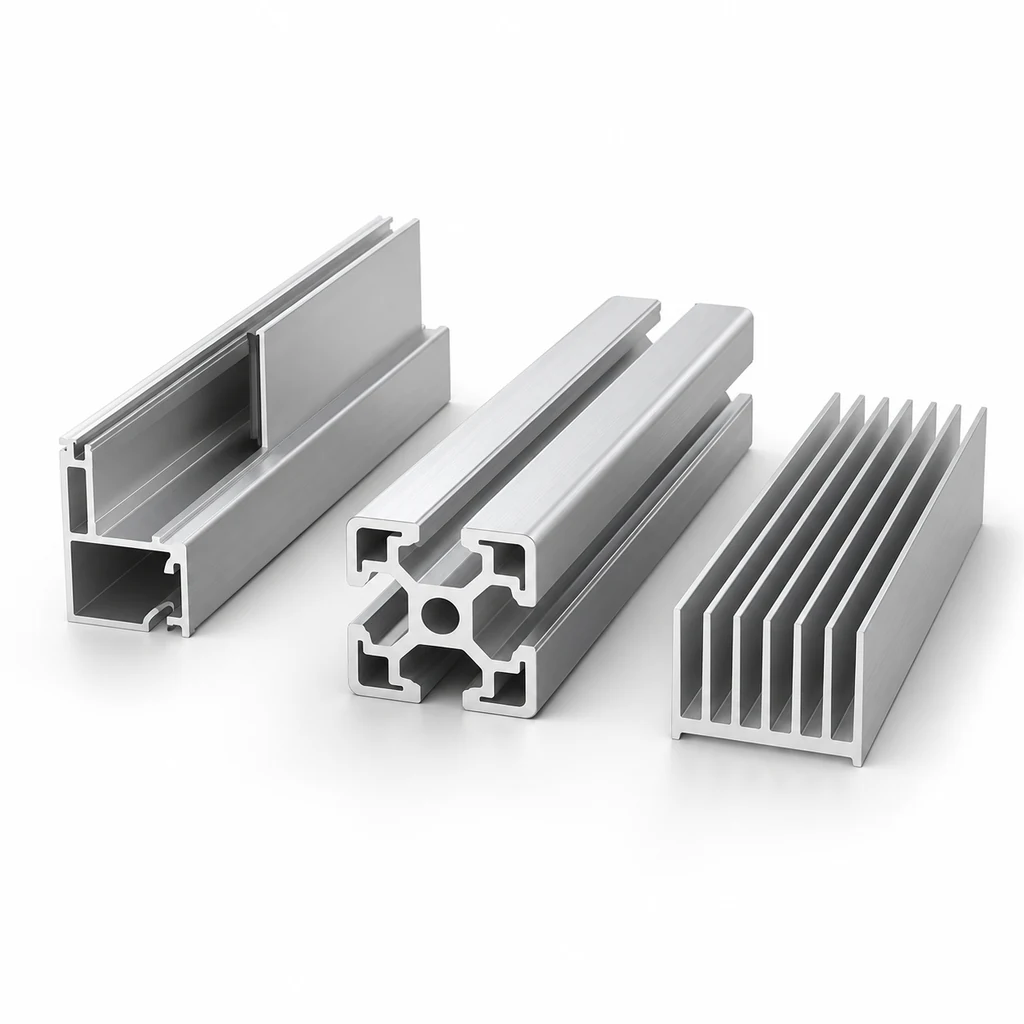
Illustrative 6063 application shapes. Alloy and temper must be specified; appearance alone does not identify the material.
ALLOY SELECTION
6063 Aluminum
Commonly selected for detailed profiles and visible surfaces. A good candidate when extrusion complexity and anodized appearance are priorities.
Key considerations
Extrudability and appearance
Typical applications
Frames, channels, enclosure sections, trim and heat-sink profiles.
Specification note
T5 and T6 conditions are common options; select the condition for the application.
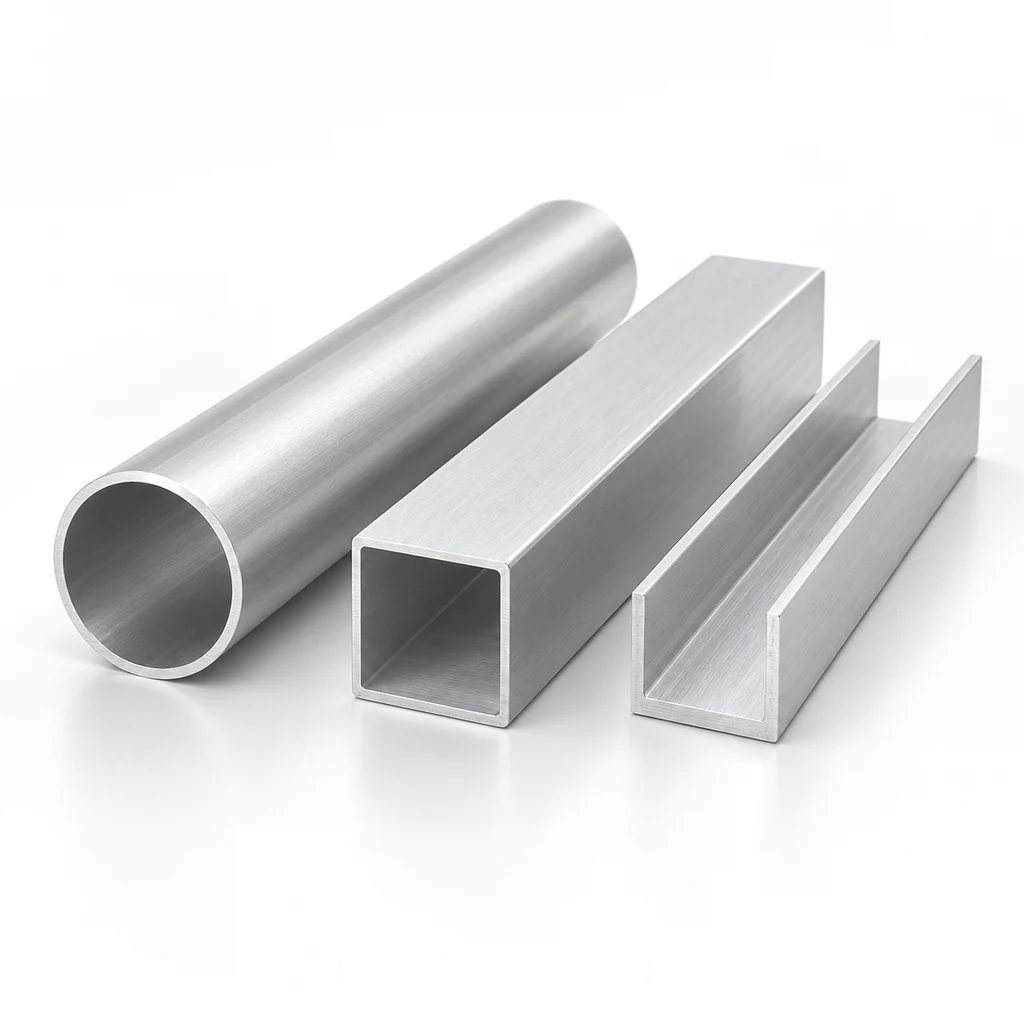
Illustrative 1100 application shapes. Alloy and temper must be specified; appearance alone does not identify the material.
ALLOY SELECTION
1100 Aluminum
Commercially pure aluminum offers good corrosion resistance and formability, but lower strength than heat-treatable 6xxx alloys.
Key considerations
Formability and conductivity
Typical applications
Light-duty formed sections and selected thermal or electrical components.
Specification note
Specify the required condition. Extrusion feasibility and sourcing are reviewed for the particular profile.
Other alloys can be reviewed on request. Profile size, wall thickness, tooling and alloy availability affect feasibility.
BEYOND THE PROFILE
Extruded. Machined. Ready for Your Assembly.
You do not have to receive a long extrusion and coordinate the remaining operations yourself. Define the finished part in your RFQ, and Xproto can quote the extrusion, machining, deburring and finishing together.
Extrusion creates the continuous cross-section. Secondary machining adds the local features: mounting holes, pockets, slots, end faces and threads.
01
Cutting & Deburring
Cut profiles to the required length, with end condition, squareness and burr requirements defined on the drawing.
02
CNC-Fräsen
Add pockets, slots, recesses, end features and mating surfaces that cannot be formed by a constant cross-section.
03
Drilling & Reaming
Produce mounting holes and selected fit-critical bores. Specify hole position, diameter, depth and datums.
04
Tapping & Threads
Add threaded connections with a defined thread standard, pitch, depth and inspection requirement.
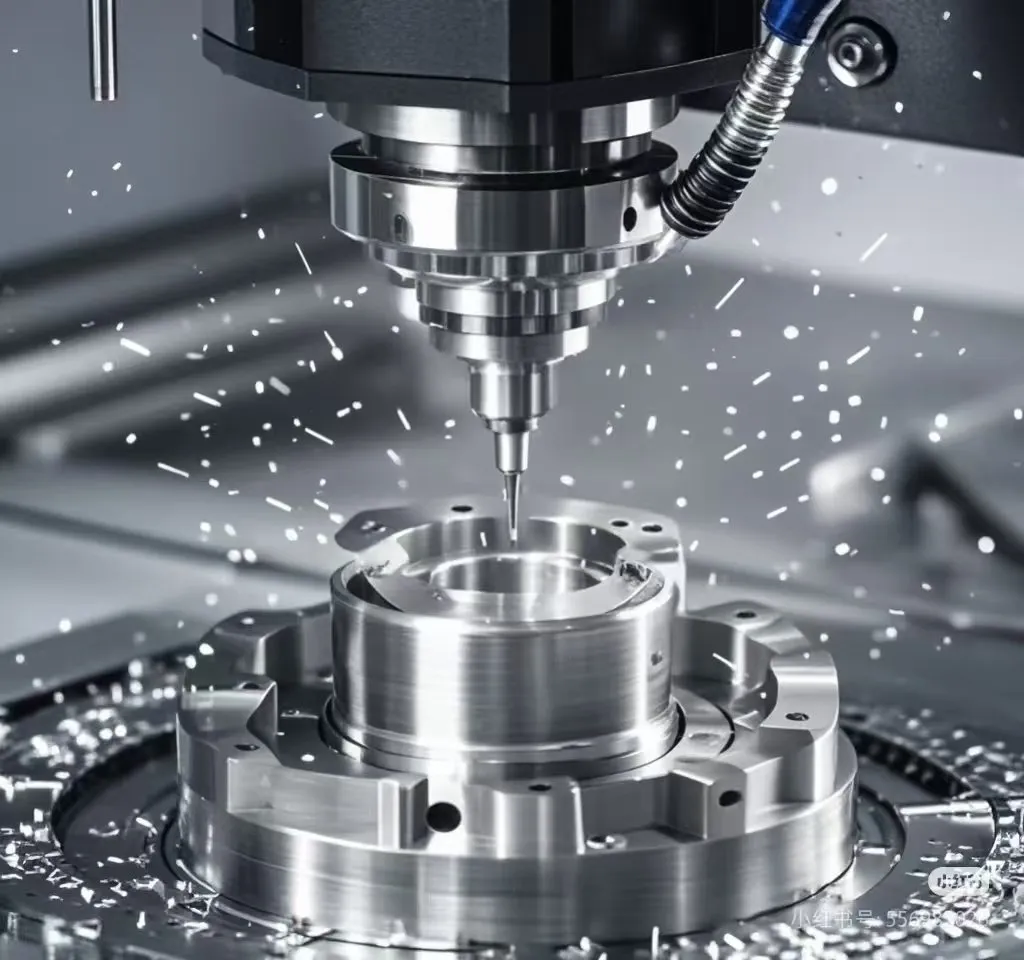
Plan the Entire Manufacturing Sequence
Identify features that must be machined before coating, surfaces that need masking and dimensions that apply after finishing. This helps avoid exposed cut edges or coating buildup on fit-critical surfaces.
The achievable tolerance is confirmed for each feature. Extruded profile tolerances and machined-feature tolerances are not interchangeable.
Surface Finishing for Aluminum Extrusions
Match the surface to the part’s use, appearance and assembly needs. Finishing feasibility is reviewed against the alloy, geometry and specification.
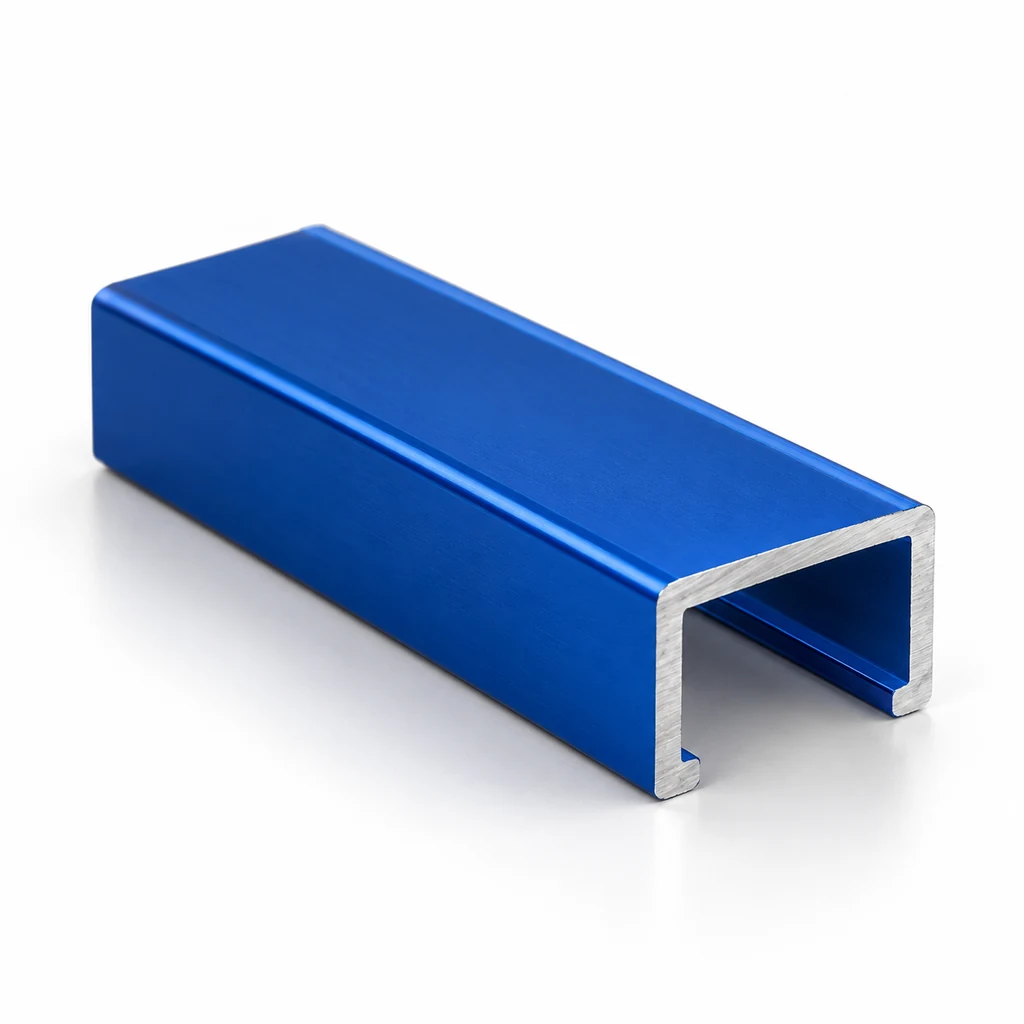
Anodizing
Protective oxide finish with metallic appearance. Specify color, coating type and masking requirements.
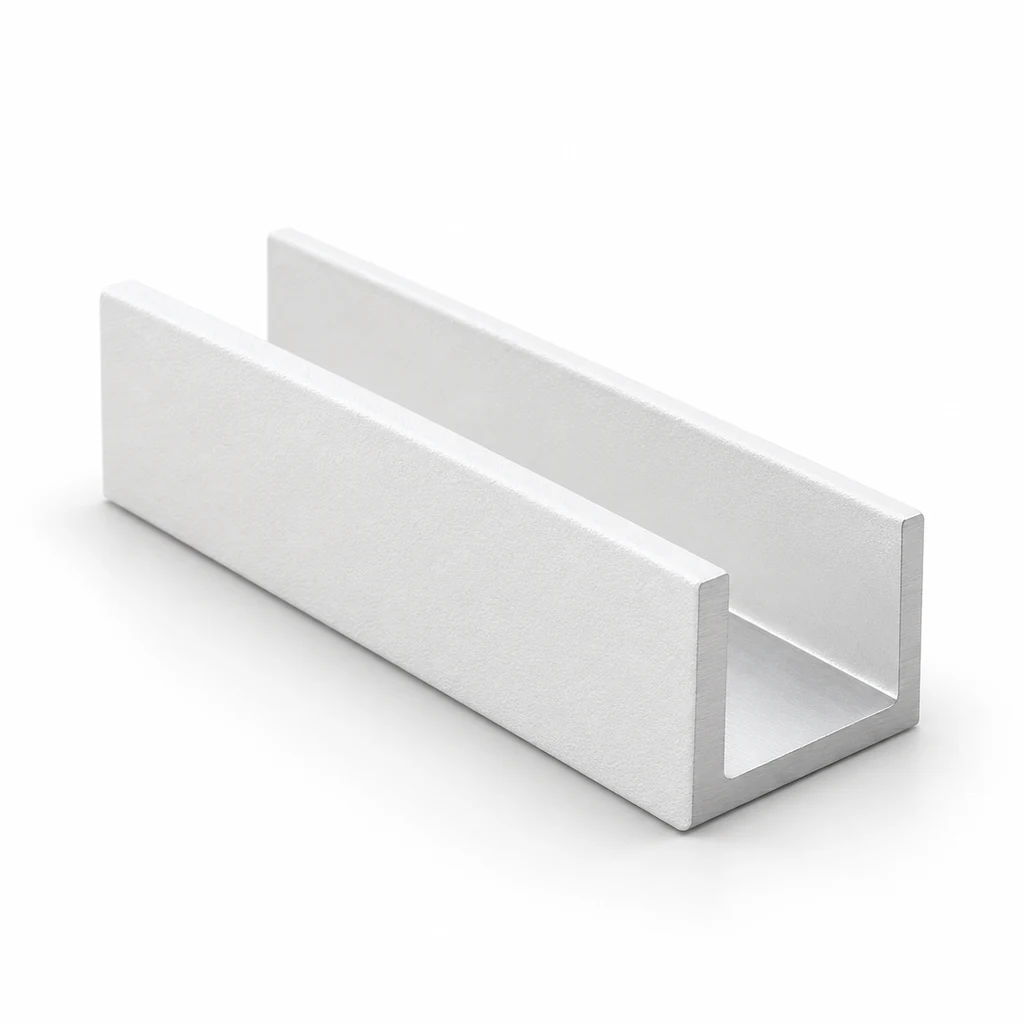
Powder Coating
A colored coating for appearance and protection. Define color reference, texture and coating thickness.
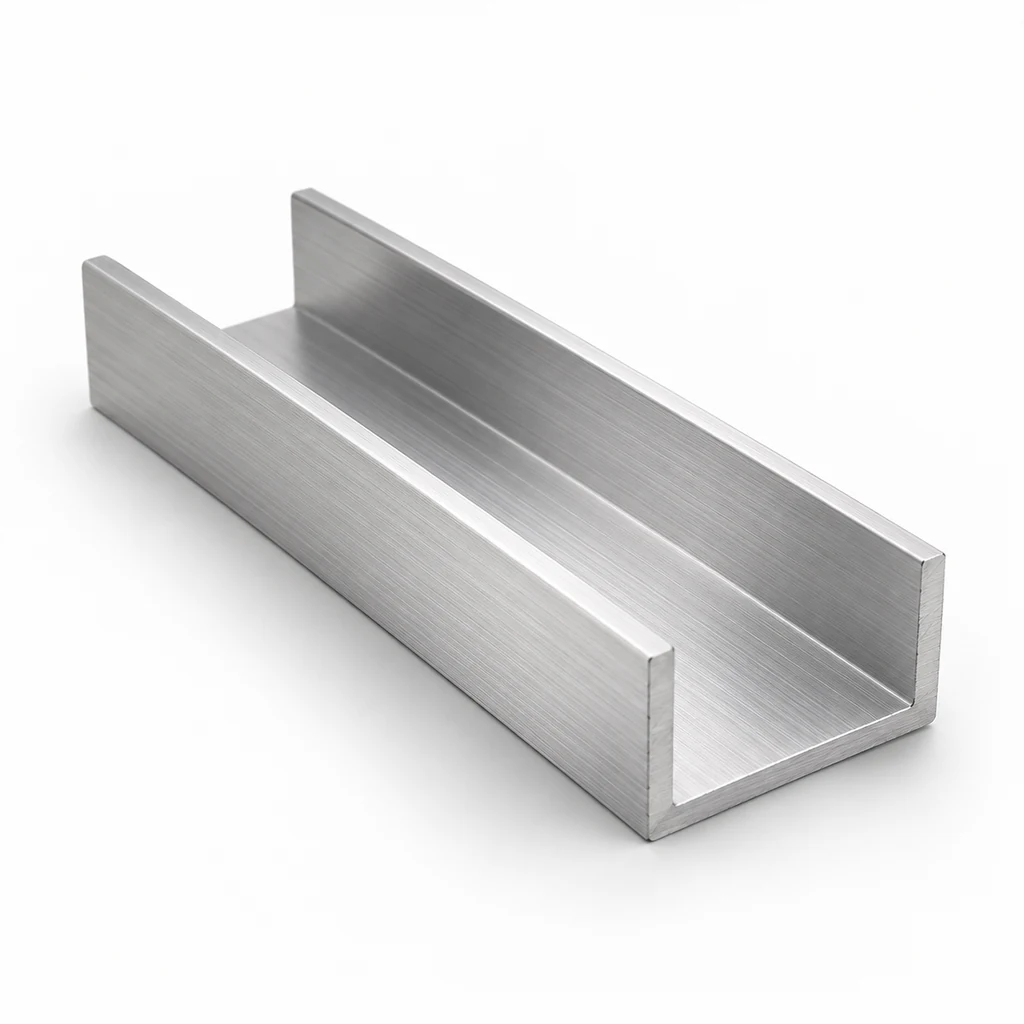
Brushing
A directional grain on visible surfaces. Specify grain direction and any protective finish applied afterward.
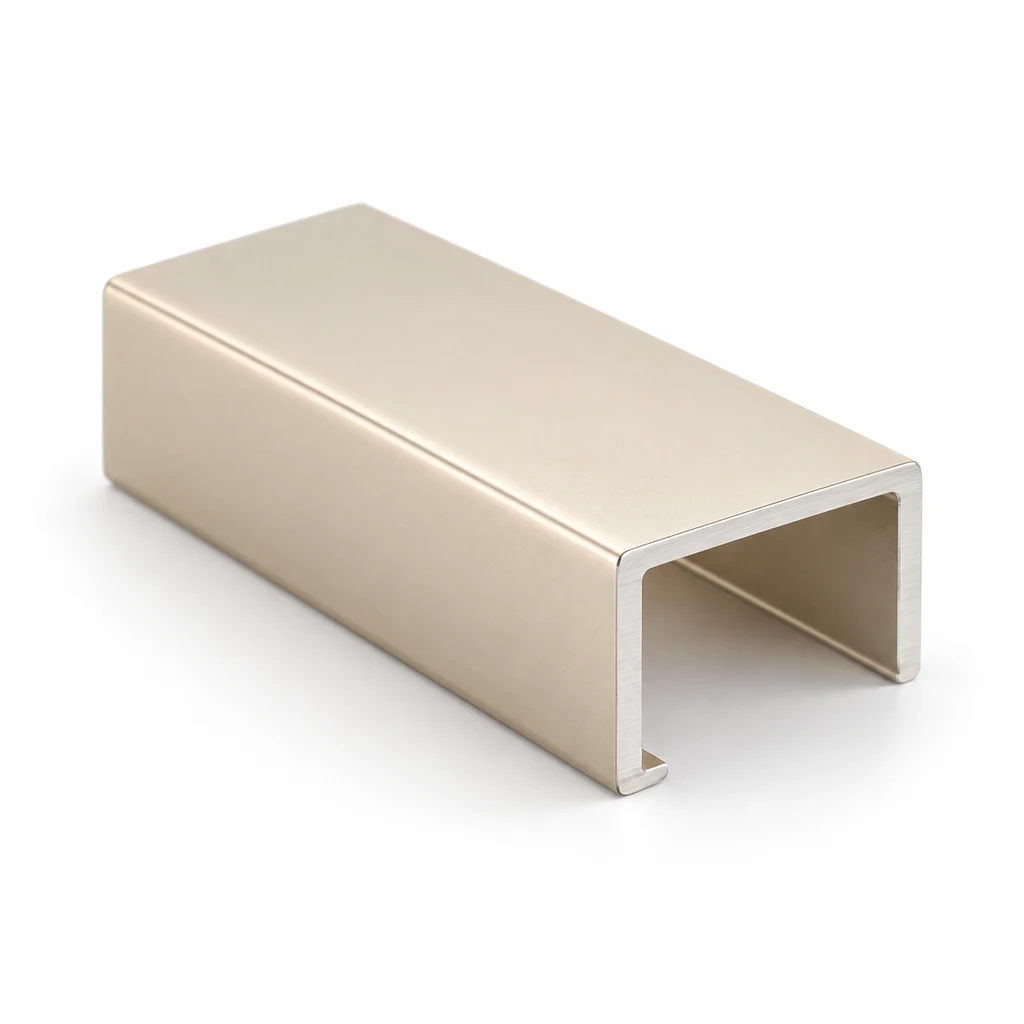
Electrophoretic Coating
A coating option for suitable aluminum profiles. Confirm the coating system and service environment.
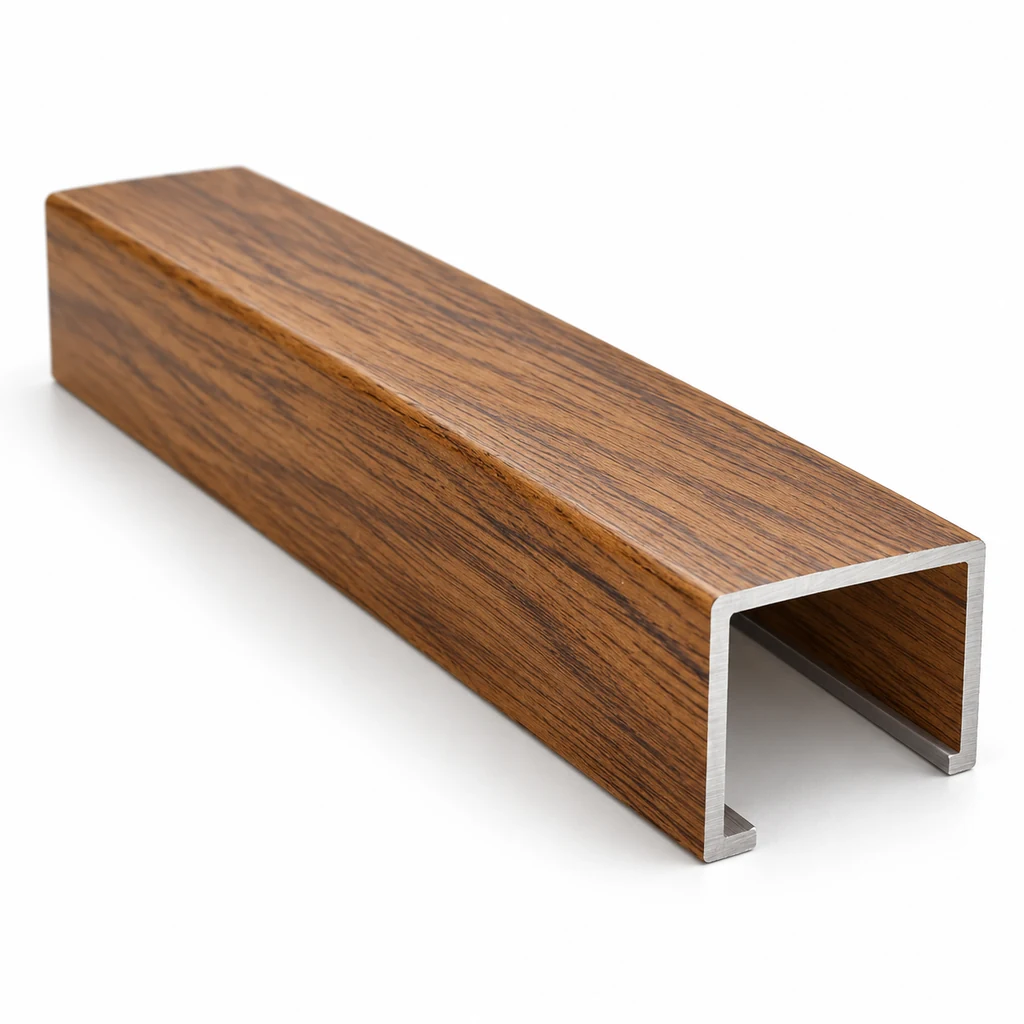
Wood-Grain Effect
A decorative appearance for selected coated profiles. Approve the pattern and sample before production.
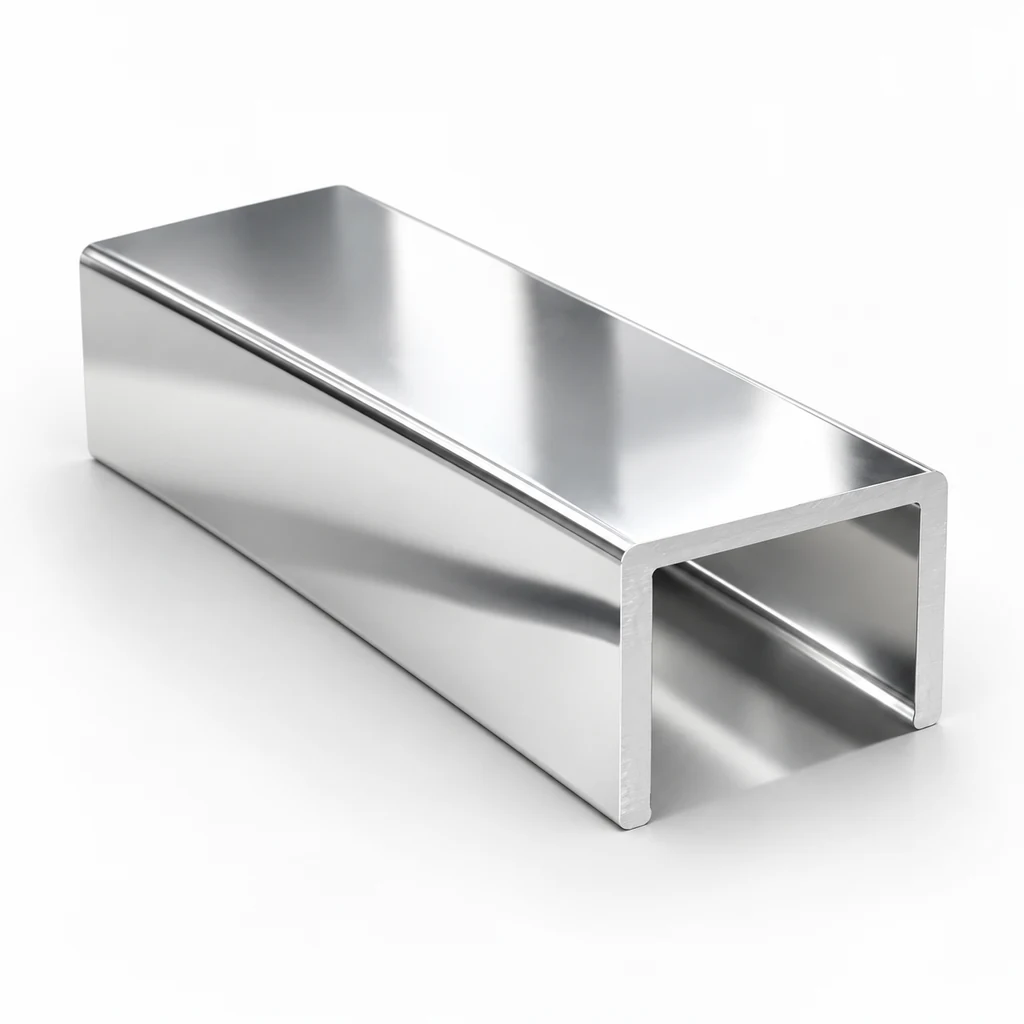
Polishing
A smoother, brighter surface. Define cosmetic acceptance separately from measured surface roughness.
These original AI-generated illustrations explain finish appearance; they are not photographs of delivered Xproto parts or a color or performance guarantee. Approve a physical sample for your project. Ask about mill finish, bead blasting or other requirements in your RFQ.
Reliable Aluminum Manufacturing, Built Around Quality
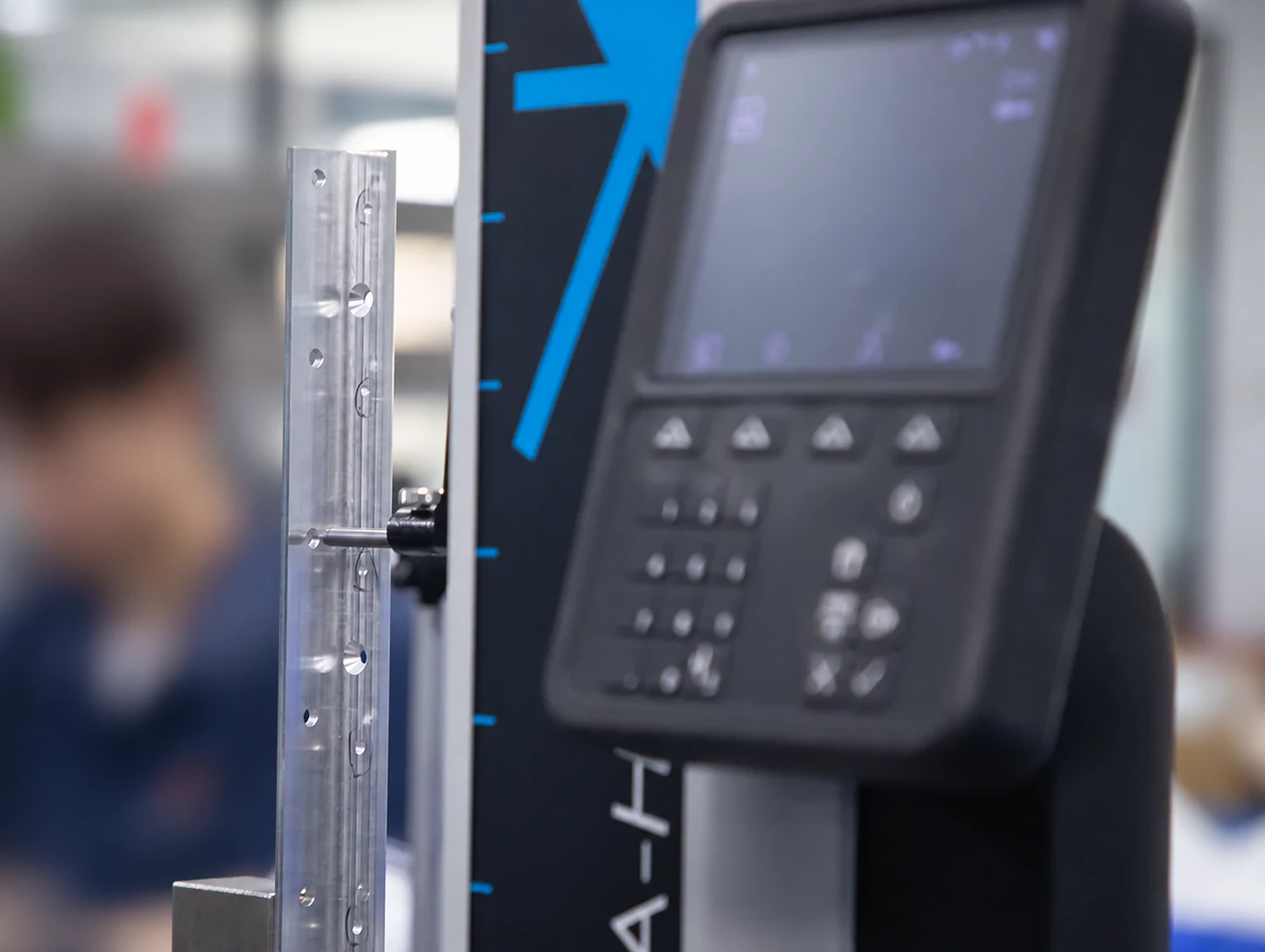
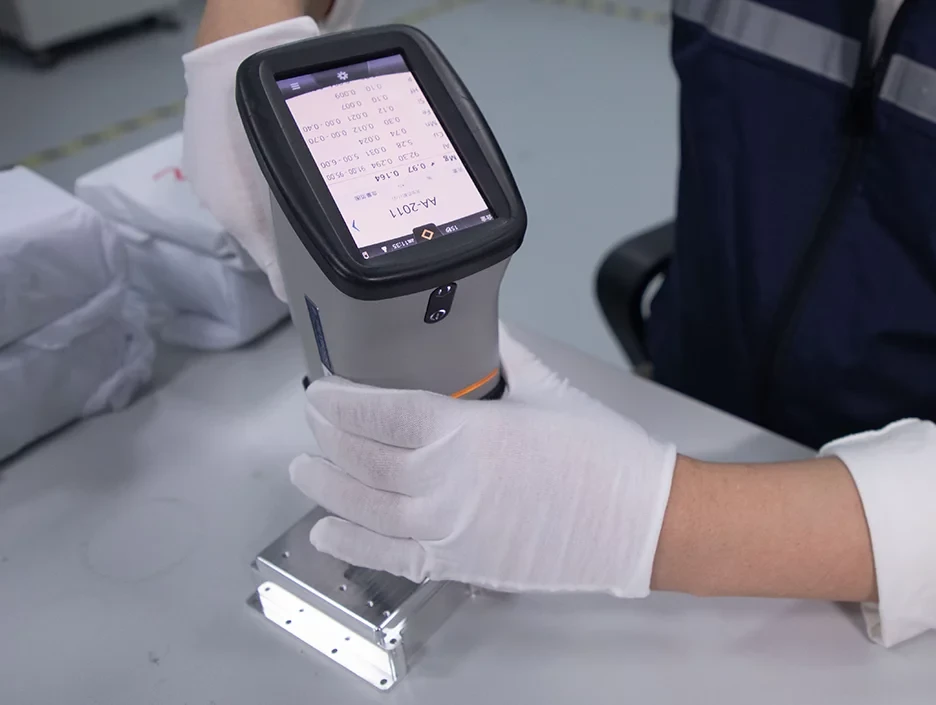
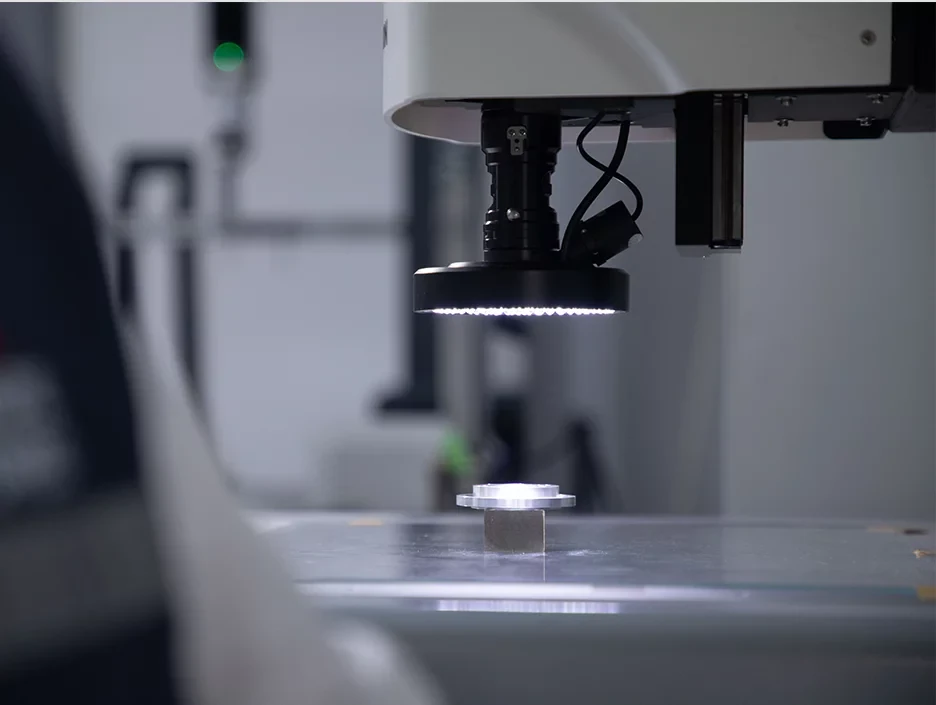
From Drawing Review to Final Inspection
Every project starts with a manufacturing review. We check alloy and temper, the profile cross-section, machining access, cosmetic surfaces and tolerance callouts before production.
Inspection checkpoints connect the approved profile to the finished component. Identify critical dimensions and required records when requesting your quote.
- Drawing-led dimensional inspection
- In-process checks for critical features
- ISO 9001:2015 quality management
- Inspection records available by request
Our Aluminum Extrusion Production Process
01
Upload Your Design
Send the profile cross-section, finished-part CAD and dimensioned drawing.
02
Confirm & Quote
Agree alloy, temper, quantity, tooling, machining, finish and schedule.
03
Tooling & Samples
For a new die, review trial profiles and approve samples before the production run.
04
Extrude & Machine
Produce the profile, cut to length and complete the specified secondary operations.
05
Finish & Inspect
Apply the agreed finish and check the finished components against the drawing.
06
Pack & Deliver
Protect cosmetic surfaces and prepare the parts for the agreed shipment.
BEFORE YOU ORDER
Aluminum Extrusion FAQs
Answers for profile selection, tooling and finished-part purchasing.
A heated aluminum billet is pressed through a die to create a continuous cross-section. The profile is cooled and processed to its specified condition, then cut and machined as required.
Yes. Include cutting, CNC milling, drilling, tapping, deburring and finishing in your request. The quotation confirms the complete scope for the finished part.
A new cross-section generally needs a dedicated die. If an existing profile meets the design, it may avoid new tooling. We review both routes against your geometry and quantity.
6061 is often selected for strength and machined structural components. 6063 is often selected for extrusion complexity and appearance. The required temper, loads and surface finish must also be considered.
Extruded dimensions, cut lengths and CNC-machined features have different tolerance considerations. Send the critical dimensions and datums. Achievable tolerances are confirmed after reviewing profile size, geometry, alloy, machining and finish.
Both are project-specific. New tooling, sample approval, profile weight, batch size, material and finishing affect the commercial minimum and schedule. Request separate tooling, sample and production timing in your quote.
Yes, specify the finish, color reference, texture, cosmetic faces and masking requirements. We review compatibility and the sequence of machining and finishing for your part.
Send a cross-section drawing and finished-part CAD model, plus a dimensioned PDF. Include alloy and temper, length, quantity, tolerances, machining, finish, inspection documents and delivery destination.
Related Manufacturing Guides
MATERIALS
Aluminum Bar Stock
Compare common aluminum grades, stock shapes and purchasing considerations.
SURFACE FINISH
Surface Roughness Chart
Understand Ra, Rz and how to specify a functional machined finish.
MACHINING
Swiss-Type Precision Machining
Explore process choices for suitable precision turned components.
FROM PROFILE TO FINISHED PART
Start Your Aluminum Extrusion Project
Get a project-specific quote for the complete manufacturing scope.
Custom Profiles · Secondary Machining · Surface Finishing · Inspection