

Rapid prototyping services turn CAD files into custom prototype parts for design review, fit checks, functional testing, and low-volume manufacturing. The right prototype manufacturing process depends on the question the part needs to answer.
Early in a project, speed and clear communication may matter most. Later, the prototype may need production material, working threads, controlled tolerances, or a finish that can be reviewed by a customer. Choosing the process from the test goal keeps the project focused and avoids paying for details that do not improve the decision.
What are rapid prototyping services?
Rapid prototyping is the fast manufacture of one or more physical parts from digital design data. A prototype manufacturing service may use additive manufacturing, CNC machining, vacuum casting, rapid tooling, or sheet metal fabrication to produce the part that best represents the final design.
Engineers use custom rapid prototypes to check form, fit, assembly, performance, material behavior, and manufacturability before committing to production tooling or a larger order.
The word “rapid” describes the feedback loop as much as the lead time. A useful prototype exposes a design issue early, while changing the CAD model is still inexpensive.
Why product teams use rapid prototyping
Lower development risk
Physical parts reveal missed clearances, awkward assembly steps, and unrealistic features before they reach production.
Clearer design reviews
A real component gives engineering, purchasing, manufacturing, and customers the same reference point.
Faster iteration
Short build cycles let the team make a change, test it, and move forward without waiting for production tooling.
More useful validation
The right process can reproduce the material, tolerance, surface, or geometry that controls actual performance.
Ways to control prototype cost
Prototype cost is driven by more than part size. Material, quantity, tolerance, surface finish, inspection, and geometry all affect setup time and manufacturing effort.
- Match the material to the test. Use lower-cost material for visual or fit checks; use final material when strength, heat, wear, or chemical resistance matters.
- Tighten only critical dimensions. General tolerances are usually enough for non-functional features.
- Delay cosmetic work. Polishing, coating, and presentation finishes can wait until appearance is part of the review.
- Define the minimum useful prototype. Build what is needed to answer the current question, not every future requirement.
Rapid prototyping process comparison
The table below is a practical starting point. Final selection still depends on the drawing, quantity, material, and features that must be controlled.
| Process | How it works | Typical result | Example materials | |
|---|---|---|---|---|
| SLA | Stereolithography | A laser cures liquid photopolymer resin | Smooth surfaces, fine detail, visual and clear prototypes | Rigid, clear, flexible, castable, and heat-resistant resin |
| SLS | Selective Laser Sintering | A laser fuses polymer powder | Durable functional parts, housings, snap fits, and complex ducts | PA 11, PA 12, glass-filled nylon, TPU |
| DMLS | Direct Metal Laser Sintering | A laser fuses metal powder layer by layer | Dense metal prototypes, internal channels, and lightweight structures | Stainless steel, aluminum, titanium, cobalt chrome, Inconel |
| FDM | Fused Deposition Modeling | Molten thermoplastic is extruded in layers | Affordable concept parts, fixtures, and larger prototypes | ABS, ASA, PC, nylon, high-temperature thermoplastics |
| MJF | Multi Jet Fusion | Fusing agents and heat consolidate polymer powder | Repeatable nylon prototypes and short-run production parts | PA 11, PA 12, glass-filled nylon, TPU |
| PolyJet | Material Jetting | Droplets of photopolymer are jetted and UV cured | Multi-material models, soft-touch features, and realistic appearance | Rigid, clear, and rubber-like photopolymers |
| HPS | Hybrid PhotoSynthesis | DLP projection and a precision laser cure photopolymer resin | Fine internal and external features with smooth surfaces | Engineering and specialty photopolymer resins |
| CNC | CNC Rapid Prototyping | Milling and turning remove material from solid stock | Tight-tolerance functional prototypes in production materials | Aluminum, stainless steel, brass, titanium, POM, PEEK, nylon |
| VC | Vacuum Casting | A silicone mold copies a master pattern | Small batches of cosmetic plastic and elastomer prototypes | Polyurethane resins and silicone-like materials |
| RIM | Rapid Injection Molding | Prototype tooling molds production thermoplastic | Pilot runs, bridge production, and production-material testing | Production thermoplastics and liquid silicone rubber |
Typical capabilities vary by part geometry, material, supplier, and post-processing. Final tolerance, finish, and lead time should be confirmed during a DFM review.
Advantages and limitations of rapid prototyping processes
Compare the most common rapid prototyping services by surface quality, functional performance, material choice, and production constraints. Select a process below to see where it works best.
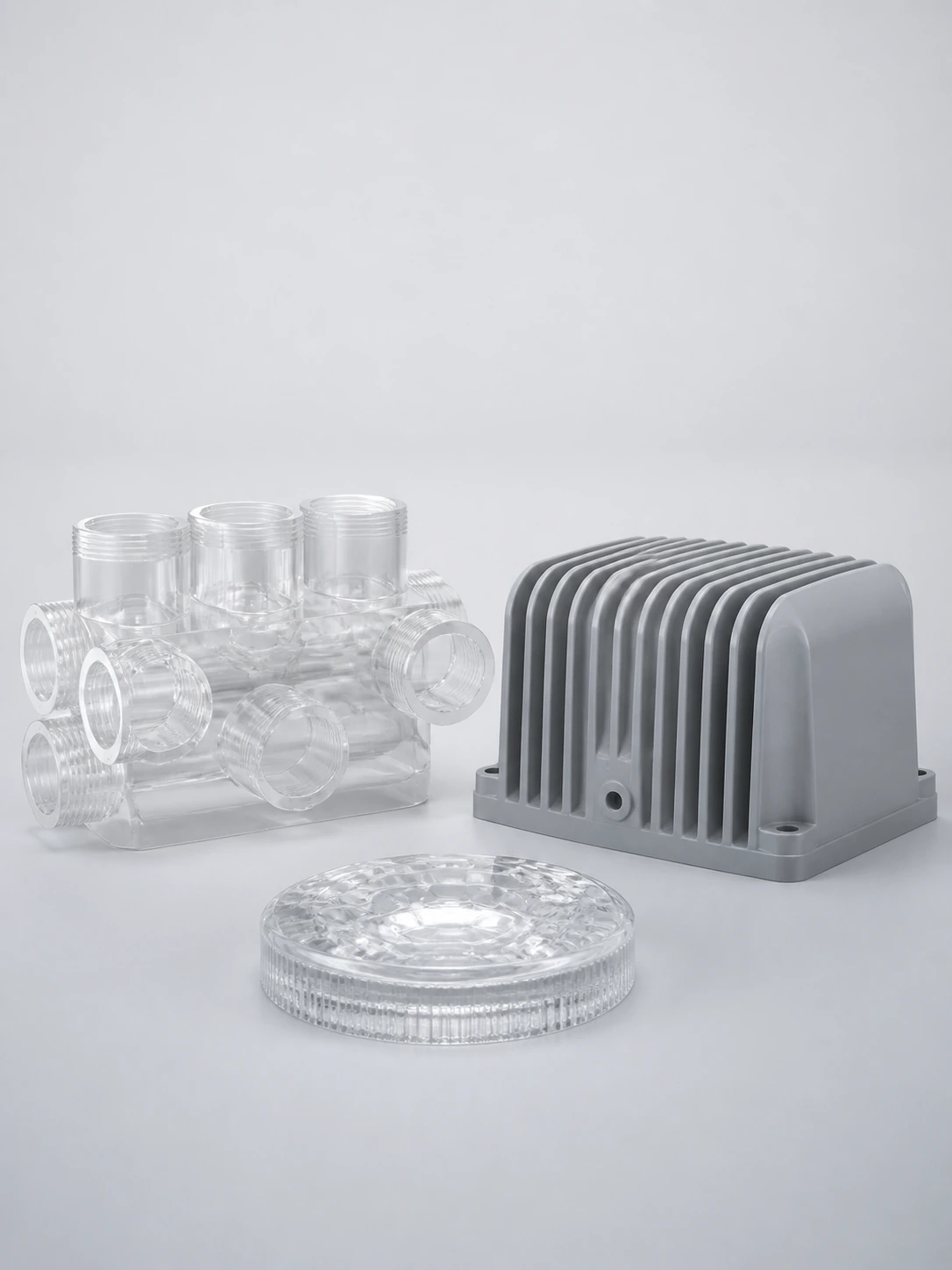
SLA 3D printing cures liquid photopolymer resin with a laser. It is well suited to smooth concept models, clear prototypes, master patterns, and small cosmetic details.
Typical materials: rigid, clear, flexible, castable, and heat-resistant resins.
Advantages
- Fine features and smooth surfaces
- Clear and presentation-grade options
- Fast visual design validation
Limitations
- UV-sensitive photopolymer materials
- Support removal and post-curing
- Properties differ from molded plastics
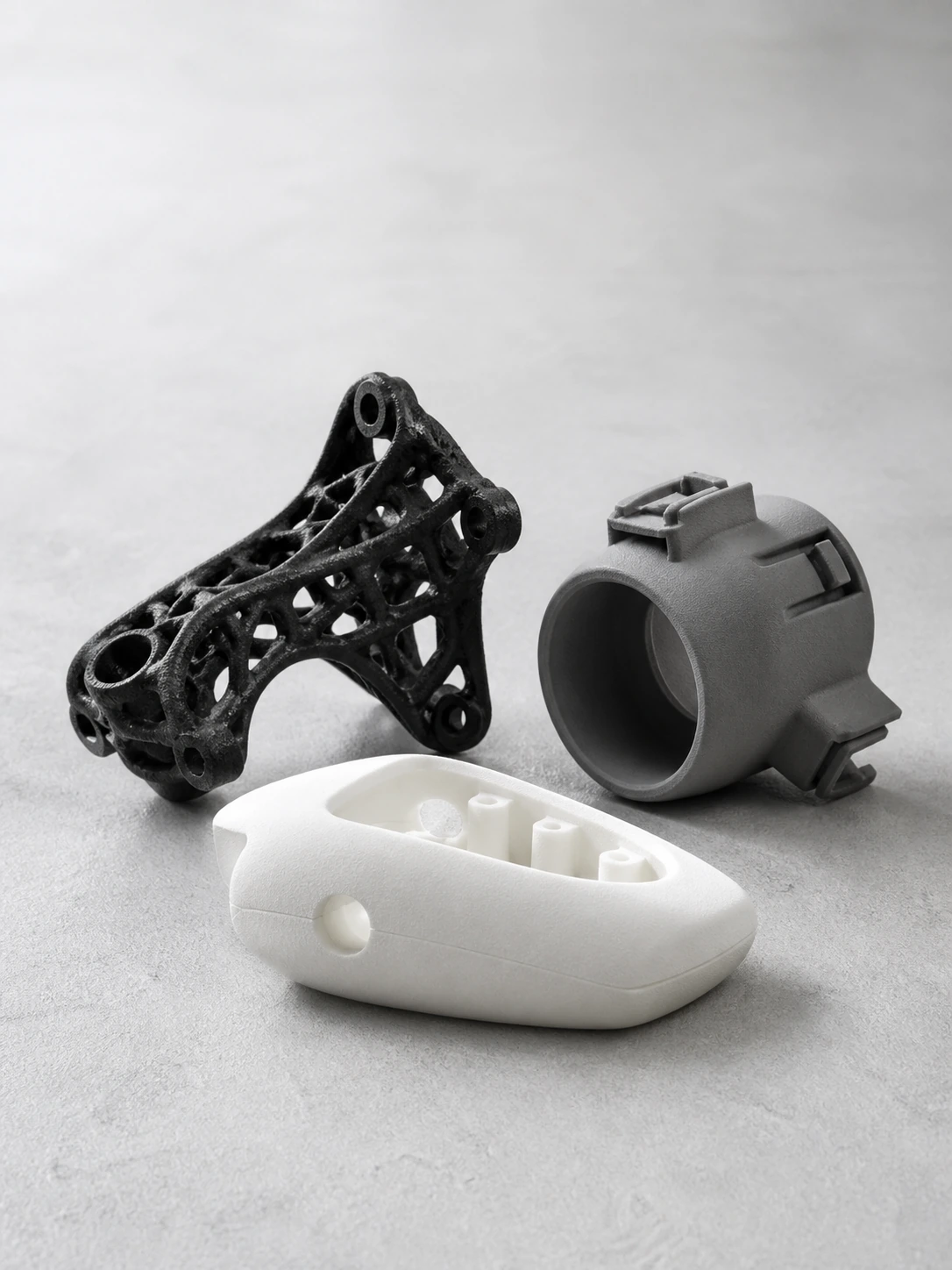
SLS 3D printing fuses nylon powder without dedicated support structures. It is a practical choice for functional prototypes, snap fits, ducts, housings, and complex low-volume parts.
Typical materials: PA 11, PA 12, glass-filled nylon, and TPU.
Advantages
- Durable functional nylon parts
- Complex geometry and nested builds
- No separate support structures
Limitations
- Natural surface is slightly grainy
- Large thin parts can distort
- Limited transparent options
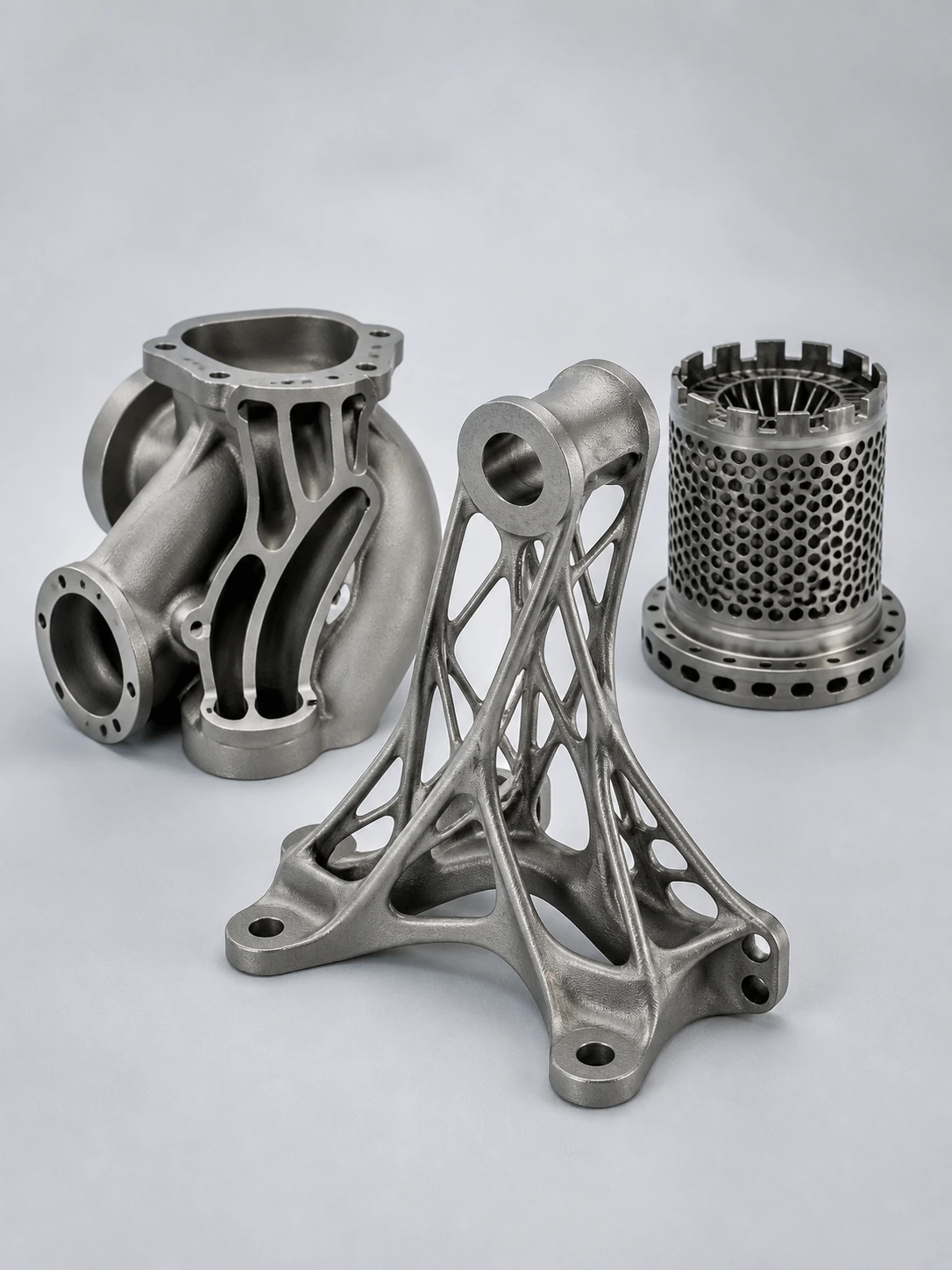
DMLS metal 3D printing builds dense metal parts layer by layer. It supports internal channels, lightweight structures, consolidated assemblies, and complex metal prototype manufacturing.
Typical materials: stainless steel, aluminum, titanium, cobalt chrome, and Inconel.
Advantages
- Production-grade metal alloys
- Complex internal geometry
- Reduced assembly count
Limitations
- Higher process cost
- Support removal and heat treatment
- Critical features may need CNC finishing
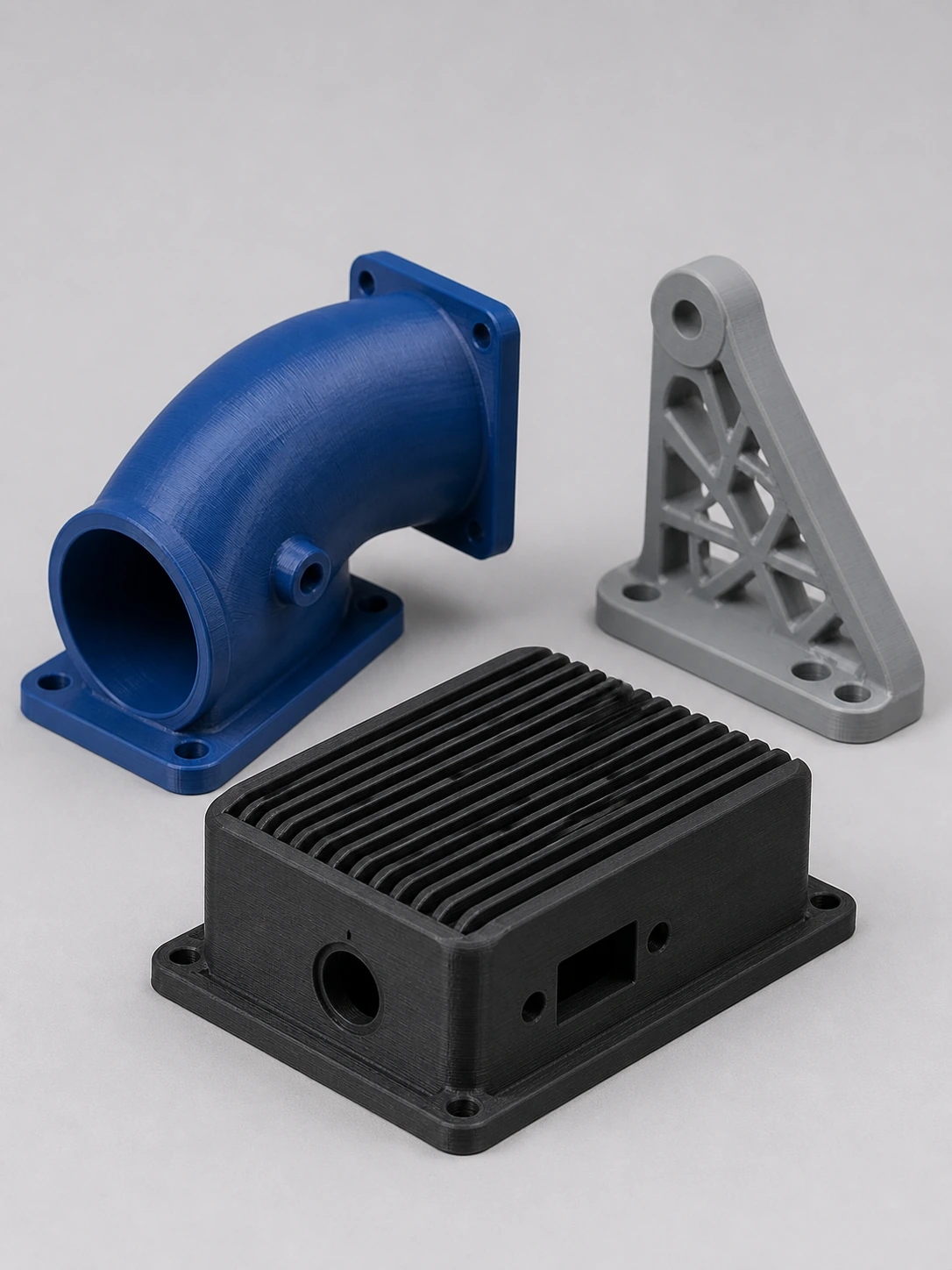
FDM 3D printing deposits thermoplastic filament layer by layer. It is widely used for affordable concept models, larger prototypes, jigs, fixtures, and early functional checks.
Typical materials: ABS, ASA, PC, nylon, and high-temperature thermoplastics.
Advantages
- Cost-effective for larger parts
- Wide thermoplastic selection
- Fast tooling and fixture production
Limitations
- Visible layer lines
- Directional strength differences
- Fine details may be limited
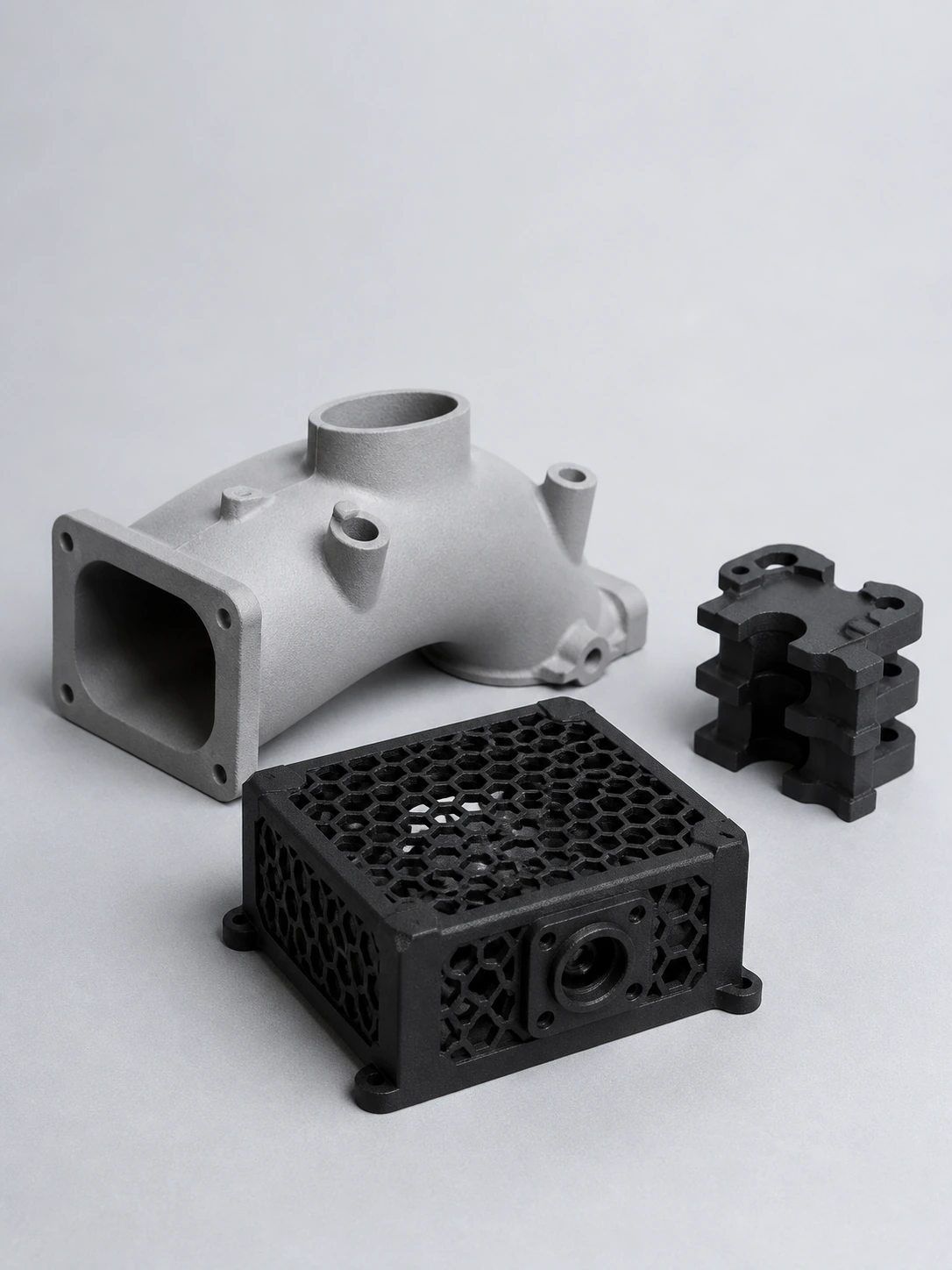
MJF 3D printing produces consistent nylon parts with fine detail and useful mechanical performance. It fits functional prototypes, assemblies, and short-run production.
Typical materials: PA 11, PA 12, glass-filled nylon, and TPU.
Advantages
- Repeatable functional parts
- Good detail and uniform strength
- Efficient short-run production
Limitations
- Powder-textured surface
- Fewer clear or cosmetic materials
- Color and finish may need secondary work
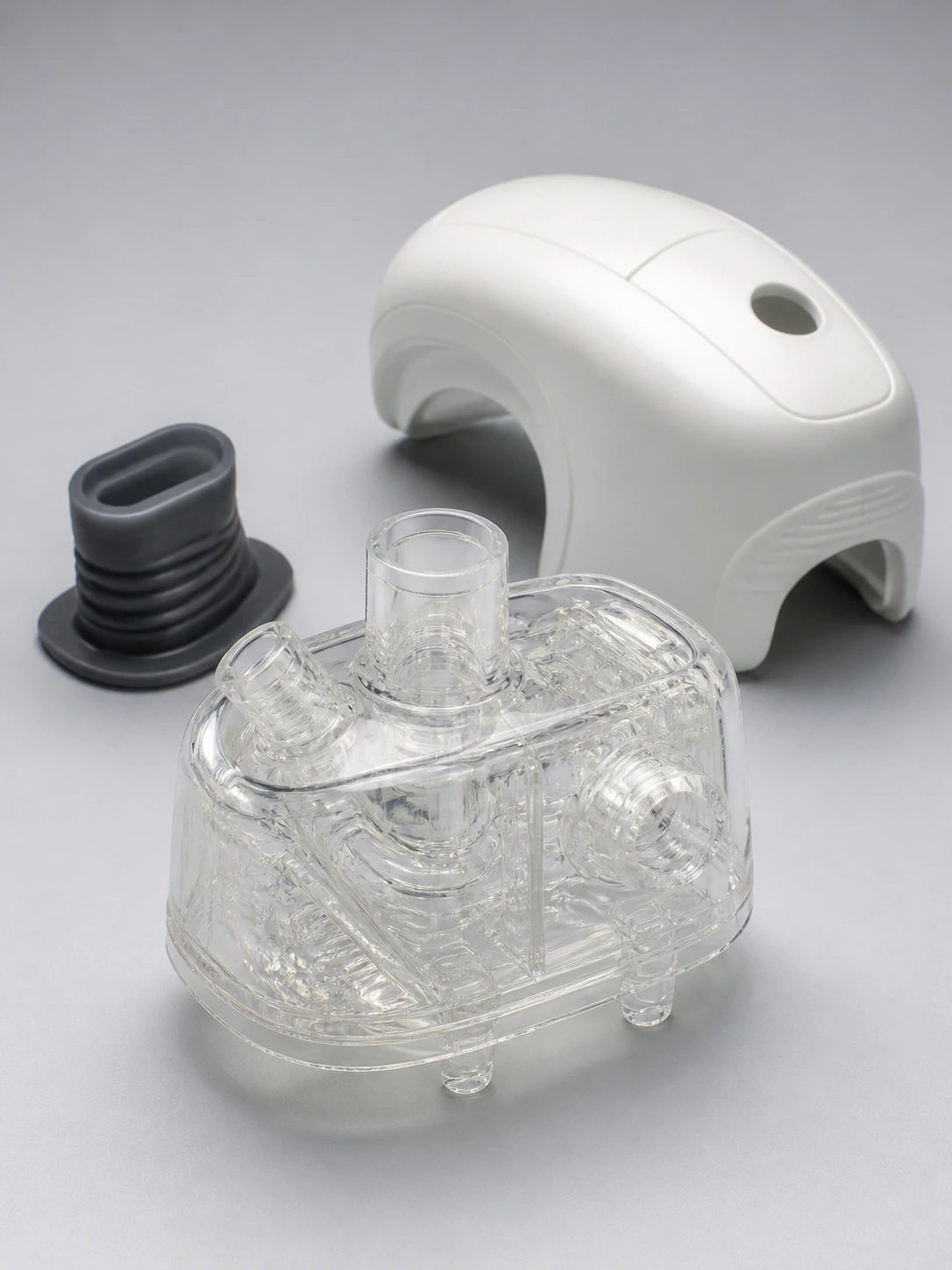
PolyJet jets and cures thin layers of photopolymer. It can combine colors, rigid areas, and rubber-like features for realistic appearance models and ergonomic prototypes.
Typical materials: rigid, transparent, rubber-like, and multi-material photopolymers.
Advantages
- Excellent detail and smooth finish
- Multi-color and multi-material parts
- Realistic presentation models
Limitations
- Best suited to short-term testing
- Support material must be removed
- Material cost can be high
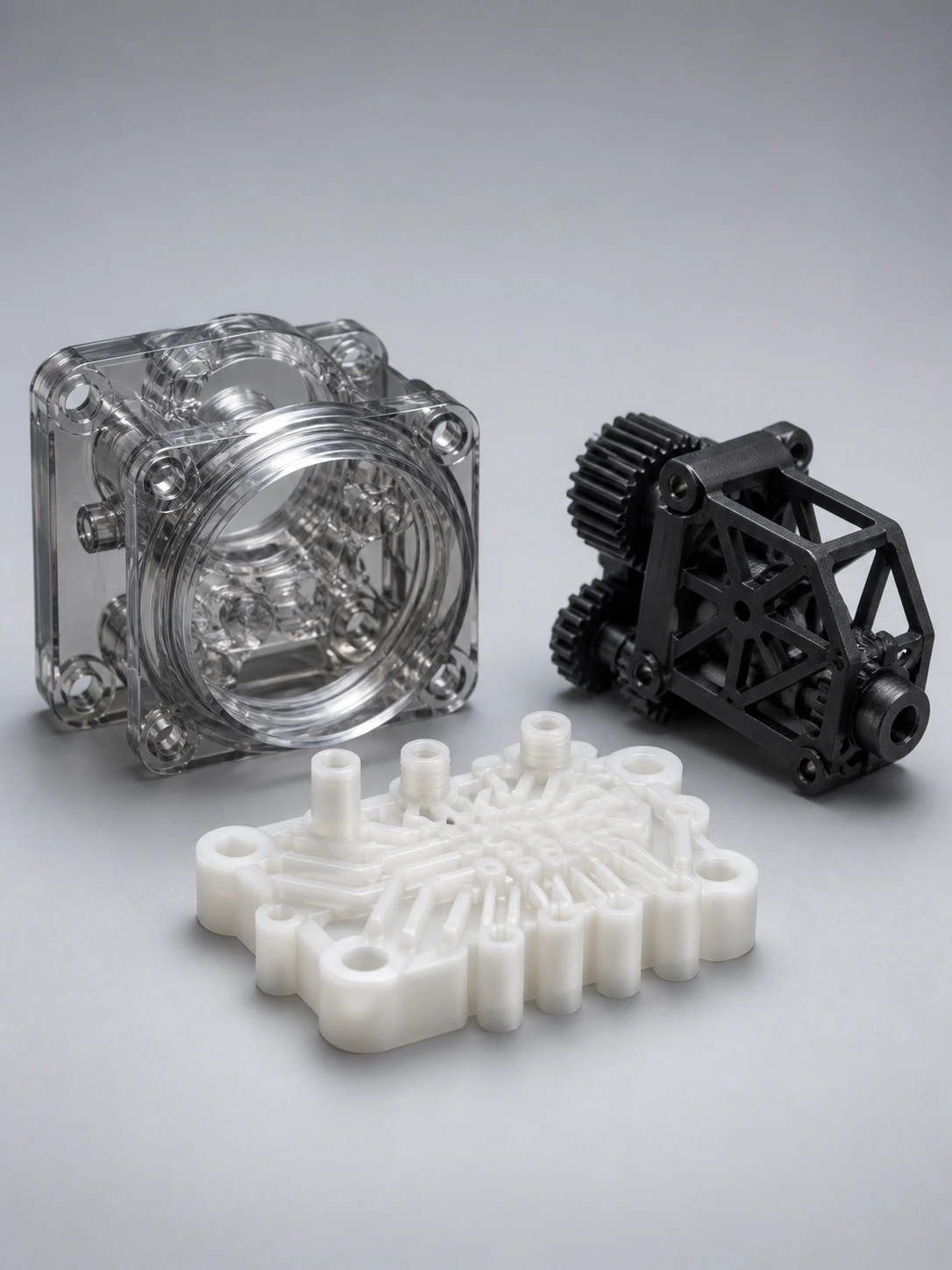
HPS combines digital light projection with a precision laser to improve feature definition in photopolymer prototype parts. It targets fine internal and external details with a smooth finish.
Typical materials: engineering and specialty photopolymer resins.
Advantages
- Fine detail and controlled edges
- Smooth presentation surfaces
- Fast resin prototype production
Limitations
- Platform and resin availability vary
- Post-curing may be required
- Photopolymers differ from final thermoplastics
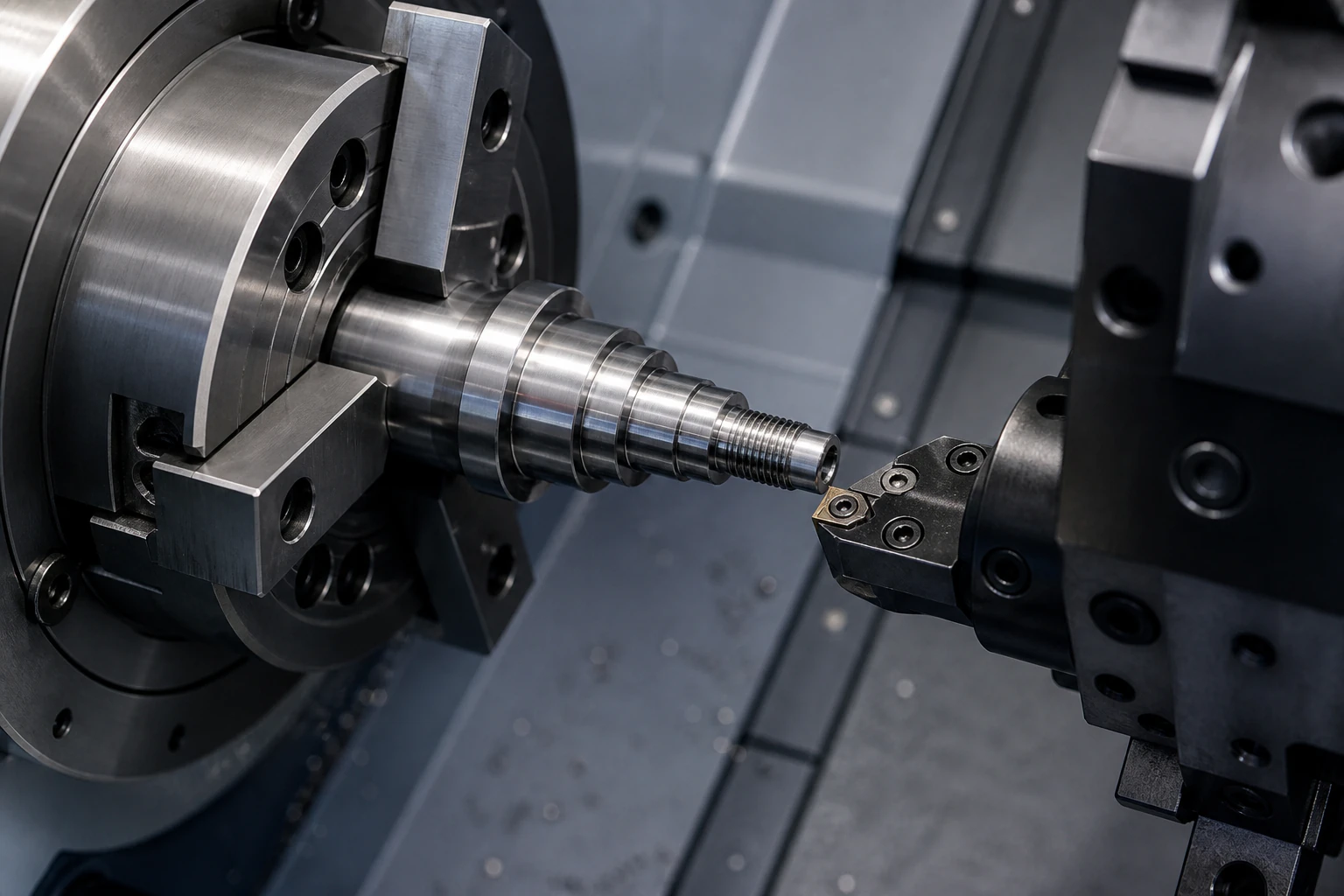
CNC machining for production-material prototypes
CNC machining uses solid metal or engineering plastic stock, making it the preferred rapid prototype manufacturing process when the test depends on tight tolerances, working threads, sealing faces, heat, wear, or final-material strength.
Production materials, accurate features, strong surface quality, and clear inspection results.
Tool access, deep cavities, internal corners, undercuts, and thin walls can increase cost.
How to choose a rapid prototype manufacturing process
Rapid prototyping applications
Concept models
Review size, shape, ergonomics, and overall design direction.
Assembly and fit
Check interfaces, fasteners, clearances, and the order of assembly.
Functional testing
Evaluate load, heat, movement, sealing, wear, or fluid behavior.
Service-life testing
Study repeated use and likely failure points with representative parts.
Regulatory preparation
Build controlled samples for internal review and formal test planning.
Pilot production
Confirm the process, inspection plan, packaging, and supply workflow.
From rapid prototype to low-volume manufacturing
A successful prototype is not automatically production-ready. Before release, review how the part will be made at the intended volume, how variation will be controlled, and which measurements will be documented.
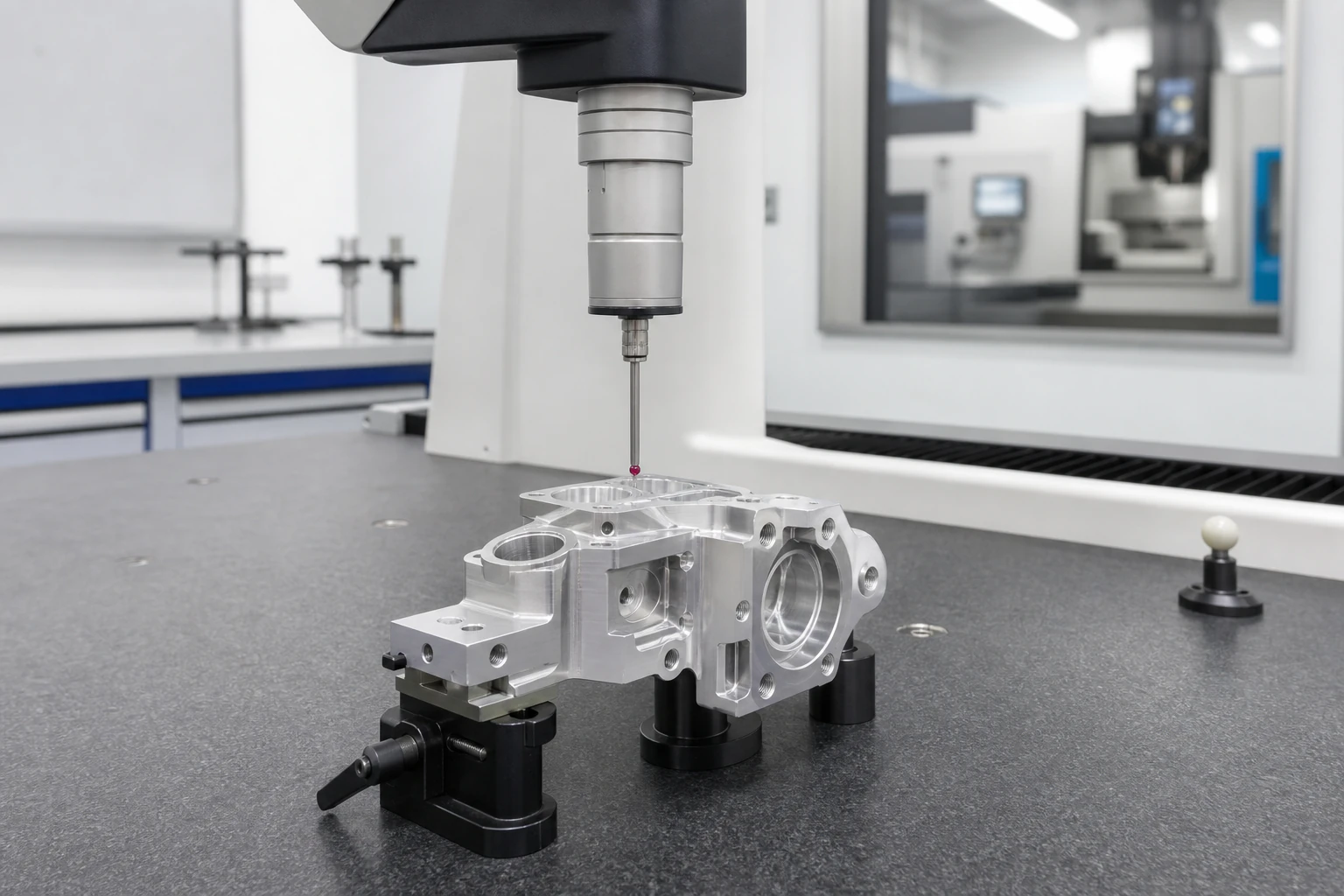
Keep the learning from each prototype build. Update the drawing, tolerance notes, material specification, finish requirement, inspection method, and assembly instructions as decisions are made. This prevents the production supplier from having to reconstruct the design history later.
Summary
Choose the rapid prototyping service that removes the most important development risk at the current stage. Use 3D printing for fast geometry and iteration, CNC rapid prototyping for real-material functional parts, vacuum casting for cosmetic small batches, rapid injection molding for molded behavior and pilot quantities, and sheet metal prototyping for formed production-like components.
If the choice is not obvious, share the CAD file, quantity, material preference, and what the prototype must prove. Those four details are usually enough to begin a useful manufacturing review.
Frequently asked questions
What is included in a rapid prototyping service?
A complete service can include CAD and drawing review, process selection, material guidance, DFM feedback, prototype manufacturing, surface finishing, dimensional inspection, and support for low-volume production.
Which rapid prototyping process is usually fastest?
Industrial 3D printing often starts fastest because it does not need tooling. CNC machining can be equally quick for straightforward parts that need final material.
When should I choose CNC machining instead of 3D printing?
Choose CNC when the test depends on material strength, tight fits, working threads, sealing surfaces, heat, wear, or a production-like finish.
Should every prototype use production tolerances?
No. Apply tight tolerances where they affect function or the decision being tested. General tolerances are normally enough elsewhere.
Can a prototype process also support low-volume production?
Yes. CNC machining, vacuum casting, rapid molding, and sheet metal fabrication can all bridge into low-volume production when the design and inspection requirements are planned for repeatability.
How do I request a custom rapid prototyping quote?
Send a 3D CAD file, 2D drawing when tolerances are important, required quantity, material, finish, and target delivery date. Include the purpose of the prototype so the manufacturer can recommend a practical process.
Need custom rapid prototyping services?
Send the CAD file, quantity, material, and test goal for a DFM review and prototype manufacturing quote.