

Adhesive bonding is one of the most versatile and efficient joining techniques for manufacturing assemblies, especially when design constraints limit other options. Unlike mechanical fasteners that add weight and concentrate stress, adhesives create seamless joints that distribute loads evenly and reduce vibration. They enable cleaner aesthetics, dampen noise, and allow designers to bond metals, plastics, and composites that might otherwise be incompatible through thermal or mechanical means.
The range of adhesive technologies available today extends beyond traditional structural epoxies; rapid-curing acrylics, hot melts, and advanced pressure-sensitive adhesives (PSAs) are enabling automated, flexible, and reworkable bonding solutions. As production lines evolve toward higher throughput and precision, these bonding solutions are becoming a prominent component of modern engineering. However, using adhesives for assembly does not come without tradeoffs.
This article will discuss the types of adhesives used for assembly, best practices for preparation and bonding, common challenges, and applications.
What Is Adhesive Bonding in Manufacturing?
Adhesive bonding refers to the process of joining materials through a combination of mechanical interlocking and chemical adhesion at the molecular interface between surfaces. Unlike welding or soldering, which require melting of the substrate, or fastening, which relies on mechanical hardware, adhesives achieve a uniform bond that transmits stress more evenly across the joint.
The mechanics of adhesion involve three main forces:
- Mechanical adhesion, where the adhesive flows into microscopic surface irregularities.
- Physical adsorption, where molecular attraction occurs between the adhesive and the substrate.
- Chemical bonding, in which covalent or ionic bonds form at the interface.
By avoiding localized stress points, adhesive bonding allows thinner or lighter components to achieve structural integrity without deformation. Different forces dominate depending on the substrate (e.g., mechanical adhesion often dominates on rough metallic surfaces vs. chemical bonding on certain plastics).
Types of Adhesives and Their Characteristics
Engineers select adhesives based on performance, cure mechanism, aesthetics, and manufacturing constraints. Adhesives used for assembly can be categorized into three main types: Structural, semi-structural, and non-structural. Each one serves a specific role based on design requirements, performance targets, and production speed.
Structural Adhesives
These are high-strength adhesives formulated for load-bearing joints.
Epoxies remain the benchmark for structural bonding and are prized for their exceptional strength, temperature tolerance, and chemical resistance. They are ideal for metal-to-metal and composite-to-metal joints where long-term durability is essential.
Although cure times are often longer, modern formulations allow heat-accelerated curing and increased toughness for demanding applications such as aerospace panels and automotive chassis components.
Acrylic adhesives offer a faster-curing alternative compared to epoxies and exhibit strong adhesion to dissimilar materials, including plastics and coated metals. Their resistance to impact and vibration makes them suitable for mixed-material assemblies in vehicles, appliances, and electronics.
Semi-Structural Adhesives
These offer a balance of flexibility, impact resistance, and cure speed.
Cyanoacrylates (instant adhesives) deliver extremely rapid bonding—often within seconds—which makes them ideal for small components, sensor housings, and plastics where speed and precision are paramount. However, they are brittle and less suited for high-temperature or high-load conditions.
Urethane adhesives bridge the gap between strength and flexibility. Their ability to absorb shock and accommodate differential expansion makes them valuable for assemblies exposed to vibration, such as automotive interiors or consumer devices.
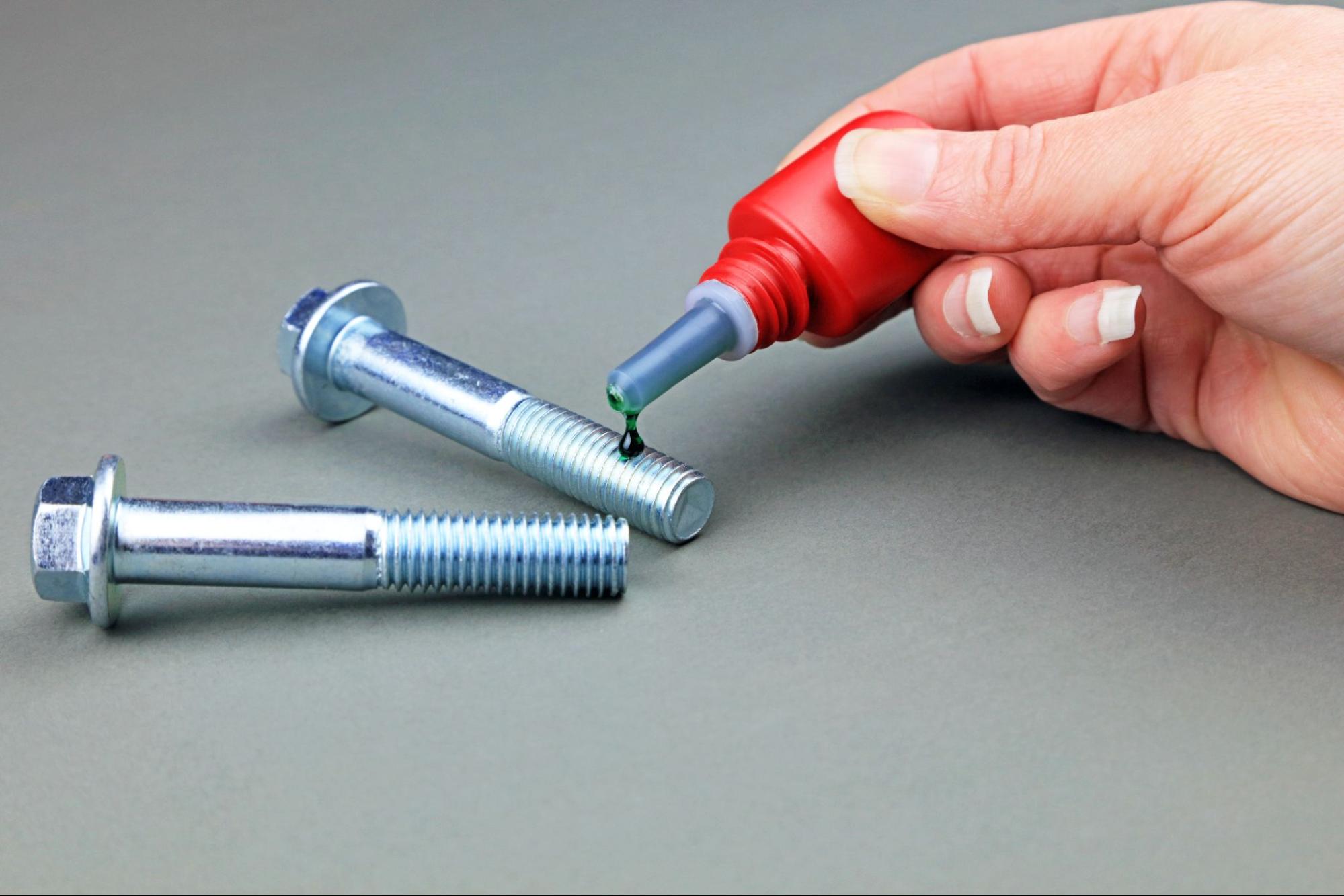
Anaerobic adhesives, commonly used for threadlocking and sealing, cure in the absence of oxygen when held between metal surfaces. They prevent loosening in bolts, fittings, and rotating assemblies.
Nonstructural Adhesives
Ideal for trim, housings, packaging, and automated consumer assembly.
Hot melts are thermoplastic resins applied in molten form that solidify rapidly as they cool. They enable high-speed assembly of plastic housings, packaging, and electronic components where medium strength and rapid throughput are critical.
Pressure-Sensitive Adhesives (PSAs) / VHB (Very High Bond) Tapes provide an instant, clean bonding solution. PSAs form bonds under light pressure, offering excellent flexibility, reworkability, and vibration damping. They are widely used for display modules, nameplates, and trim applications where aesthetics and process simplicity are key.