

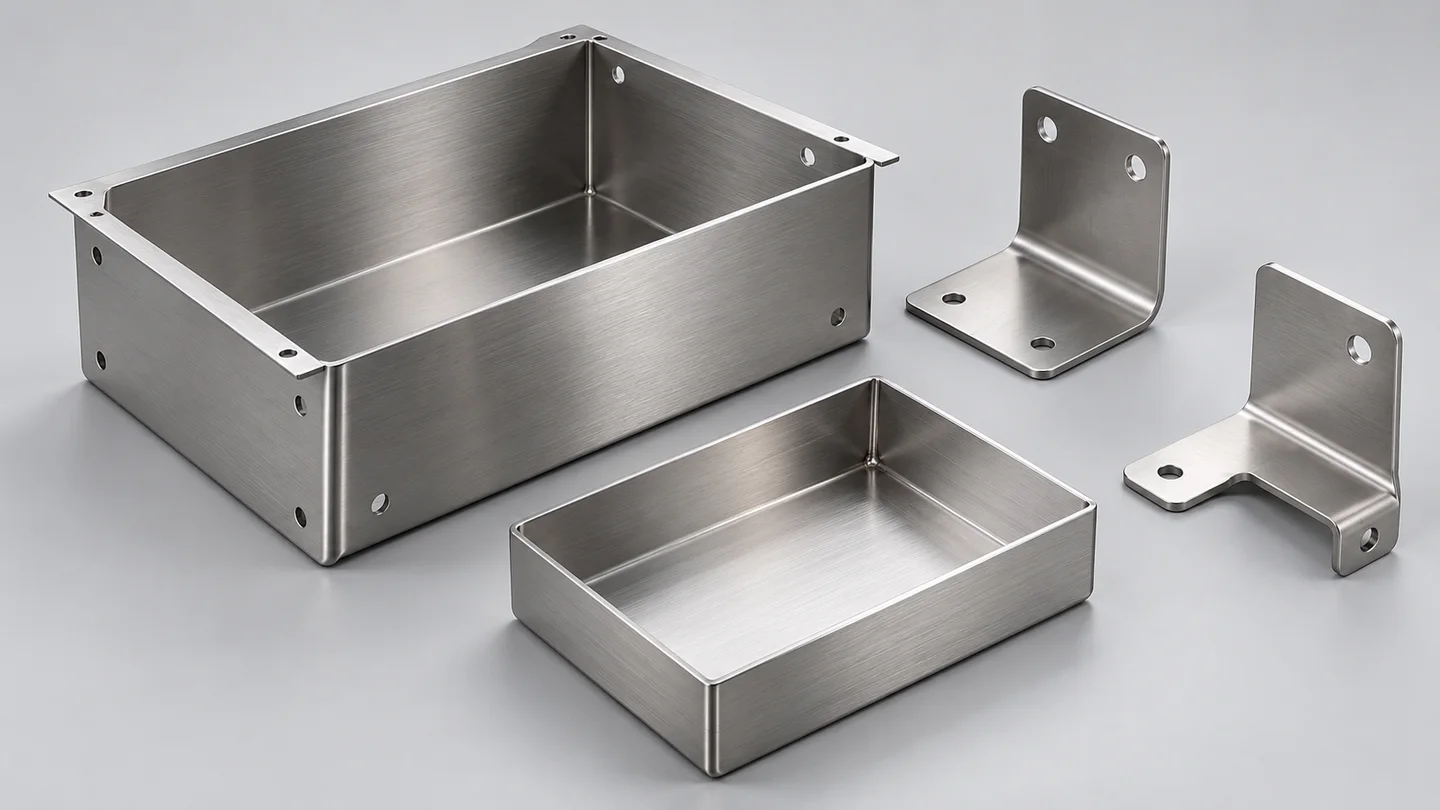
Stainless steel metal fabrication turns sheet, plate, and other stock into custom parts through cutting, forming, joining, and finishing. For buyers ordering enclosures, brackets, panels, or welded assemblies, a clear specification makes supplier quotes easier to compare.
This guide explains how to choose a grade, define the finish, control fabrication costs, and prepare an RFQ. Explore Xproto’s custom sheet metal fabrication service when planning your next project.
Choosing a Grade for Stainless Steel Metal Fabrication
Start with the operating environment: moisture, cleaning chemicals, temperature, and chloride exposure. Then consider strength, forming, welding, and appearance. Specifying only “stainless steel” leaves important purchasing decisions unresolved.
- 304 and 304L: Common options for general-purpose fabricated parts. They combine corrosion resistance with good formability and weldability. The lower-carbon 304L grade helps reduce sensitization risk during welding.
- 316 and 316L: Their molybdenum content improves resistance to certain forms of localized corrosion, particularly in chloride-containing environments. They typically carry a material cost premium.
Neither grade is corrosion-proof. Confirm suitability for the actual chemical exposure and temperature. State the applicable material specification and certificate requirements on the drawing or purchase order.
Processes Used in Custom Stainless Steel Fabrication
Cutting and edge preparation
Laser cutting, punching, or other suitable methods create the flat profile and openings. The choice depends on thickness, geometry, edge requirements, and quantity. Specify burr removal and any edges that need a defined radius.
Bending and forming
Press brake forming creates flanges, channels, and folded enclosures. Inside bend radius, flange length, and tool access affect feasibility. Holes close to a bend can distort, so review their position before releasing the design.
Welding and assembly
TIG or MIG welding may suit different joint designs and production needs. Define weld locations, joint requirements, and whether seams must remain visible or be blended. Heat input and welding sequence affect distortion, especially on thin panels.
Finishing and inspection
Deburring, brushing, polishing, and appropriate cleaning prepare the part for use. Inspection should address critical dimensions, assembly fit, weld acceptance, and the specified surface condition.
Specify Surface Finish Before Requesting a Quote
Surface requirements can change both price and lead time. Choose them before ordering rather than deciding after fabrication.
- 2B mill finish: A relatively smooth, low-reflectivity starting surface for many functional components.
- No. 4 brushed finish: A directional appearance often chosen for visible panels. Define grain direction and how weld areas should be matched.
- Polished or mirror appearance: Requires a separate cosmetic acceptance standard. Identify the visible faces and provide a reference sample when possible.
A finish name alone does not establish a universal roughness value. If Ra matters, specify the limit and measurement requirements separately. Also define acceptable scratches, weld marks, and surface protection during transport.
Discuss post-weld cleaning when corrosion resistance matters. Pickling removes oxide scale and the affected surface layer; passivation is a different chemical treatment. Agree on the required treatment rather than treating these terms as interchangeable.
Design Details That Help Control Fabrication Costs
For stainless steel sheet metal fabrication, economical designs allow reliable cutting, bending, and assembly. Give the supplier a 3D model and a dimensioned drawing so functional requirements are clear.
- Use consistent bend radii where the design allows.
- Leave room for forming tools, weld access, and fastener installation.
- Identify critical dimensions and datums instead of applying tight tolerances everywhere.
- Define edge breaks, thread requirements, and mating features.
- Mark cosmetic surfaces and areas that must stay free of welds or tool marks.
Material grade and thickness, cutting complexity, bend setups, welding, finish work, and inspection all influence cost. Ask for prototype and repeat-order pricing separately because setup costs affect small batches more strongly.
How to Compare Stainless Steel Fabrication Suppliers
Compare quotations against the same drawing revision and scope. A lower unit price may exclude finishing, inspection reports, hardware, packaging, or freight.
Ask how the supplier will verify material identity, prevent carbon-steel contamination, check welded assemblies, and protect cosmetic surfaces. For repeat production, agree on sample approval and how drawing changes will be controlled.
If your assembly includes turned spacers or machined mounting features, coordinate them with the fabricated parts. Xproto’s CNC machining service is a useful starting point for discussing those components.
Prepare an RFQ for Stainless Steel Metal Fabrication
Include the following information for a meaningful project review:
- CAD files, PDF drawings, units, and revision number.
- Material grade, specification, thickness, and required certificates.
- Prototype quantity, production quantity, and expected repeat demand.
- Critical tolerances, weld details, and assembly requirements.
- Finish, grain direction, cosmetic surfaces, and inspection documents.
- Delivery destination and requested shipping date.
Lead time depends on material availability, process steps, finishing, and the approval schedule. Have the supplier confirm the shipment date for your specific order.
Frequently Asked Questions
Is 316 always better than 304?
No. Select the grade for the service environment. 316 may justify its cost for certain chloride exposures, while 304 can be appropriate for many general-purpose applications.
Can a brushed finish be restored after welding?
Weld areas may need grinding and blending. Agree on appearance, grain direction, and an approval sample before production.
What is the fastest way to get a comparable quote?
Send the same complete RFQ package to each supplier. Require separate confirmation of material, finishing, inspection, and shipping scope.
Request a Project Review from Xproto
Planning stainless steel metal fabrication for a new component or assembly? Submit your drawings to Xproto for a quote with the grade, quantity, finish, and delivery requirements. A clearly defined RFQ helps align the manufacturing plan with your purchasing priorities.