

Ductile iron is a type of cast iron in which graphite forms rounded nodules rather than the flakes found in gray iron. These nodules reduce stress concentration, giving suitable grades a useful combination of strength, ductility and castability. It is also called nodular cast iron or spheroidal graphite (SG) iron.
For a finished component, however, the grade is only part of the specification. Machining, surface roughness and protective coatings must also match the drawing. This guide explains the material and uses a QT500-7 component with a specified Ra 2.5 μm polished surface and electroless nickel plating (ENP) as a practical example.
How Is Ductile Iron Made?
Ductile iron begins as molten iron with controlled carbon, silicon and other alloying elements. A nodularizing treatment, commonly using magnesium, encourages graphite to form spheroids during solidification. Inoculation and process control help establish the required graphite structure.
The metal matrix surrounding those nodules matters too. A more ferritic matrix generally favors elongation, while increasing pearlite generally raises strength and hardness. Casting section thickness, cooling conditions and heat treatment can change the result. A grade name alone does not describe every property of a particular casting.
Ductile Iron Properties: Benefits and Limitations
Ductile iron can combine the shape-making advantages of casting with greater tensile ductility than conventional flake-graphite gray iron. That makes it useful for components that must carry loads without the same brittle behavior associated with gray iron.
- Strength and ductility: Different grades balance tensile strength, yield strength and elongation. Higher strength does not automatically mean greater impact toughness.
- Machinability: Many grades can be drilled, milled, turned and tapped, but hardness, carbides and casting condition influence tool life.
- Complex shapes: Casting can create near-net-shape features, followed by machining of holes, threads and mating surfaces.
- Limitations: Unprotected ductile iron can rust. Casting defects, sharp transitions and unsuitable material grades can compromise performance. Welding requires a qualified, material-specific approach.
For fatigue loading, low temperatures or safety-critical use, specify the required tests rather than relying on a general description of the material.
Ductile Iron vs. Gray Iron vs. Steel
Ductile iron vs. gray iron: Both are cast irons, but graphite shape changes their behavior. Gray iron has flakes and is often chosen for vibration damping and machinability. Ductile iron has nodules and generally offers better tensile elongation and resistance to crack initiation from graphite features. Neither is the best choice for every component.
Ductile iron vs. steel: Steel does not contain the same dispersed graphite-nodule structure. Suitable steels may offer better weldability or toughness for a particular duty, while ductile iron can offer casting and machining advantages. Compare actual grades, geometry, loading and total manufacturing cost—not just the material names.
Ductile iron is therefore not a direct substitute for every steel or gray-iron drawing. A material change needs engineering approval and updated documentation where required.
What Does QT500-7 Mean?
QT500-7 is a Chinese ductile iron designation. QT identifies ductile cast iron; it does not mean “quenched and tempered.” The numbers commonly indicate a minimum tensile-strength class of 500 MPa and a minimum elongation requirement of 7% under the applicable test conditions.
These are grade requirements, not measurements taken from the component pictured below. The applicable material standard, casting section, test coupon and inspection certificate govern acceptance. Grades from different national standards should not be treated as automatically interchangeable simply because their names or headline values look similar.
When ordering QT500-7, state the governing standard and revision, required mechanical properties and any inspection or certification requirements.
Practical Case: QT500-7 with Polishing and ENP
The Xproto case photo shows a machined component with a curved opening and multiple holes. The specified manufacturing combination is QT500-7 ductile iron + polishing to Ra 2.5 μm + ENP electroless nickel plating. The photo illustrates the component; it does not by itself verify its material grade, measured roughness or coating performance.
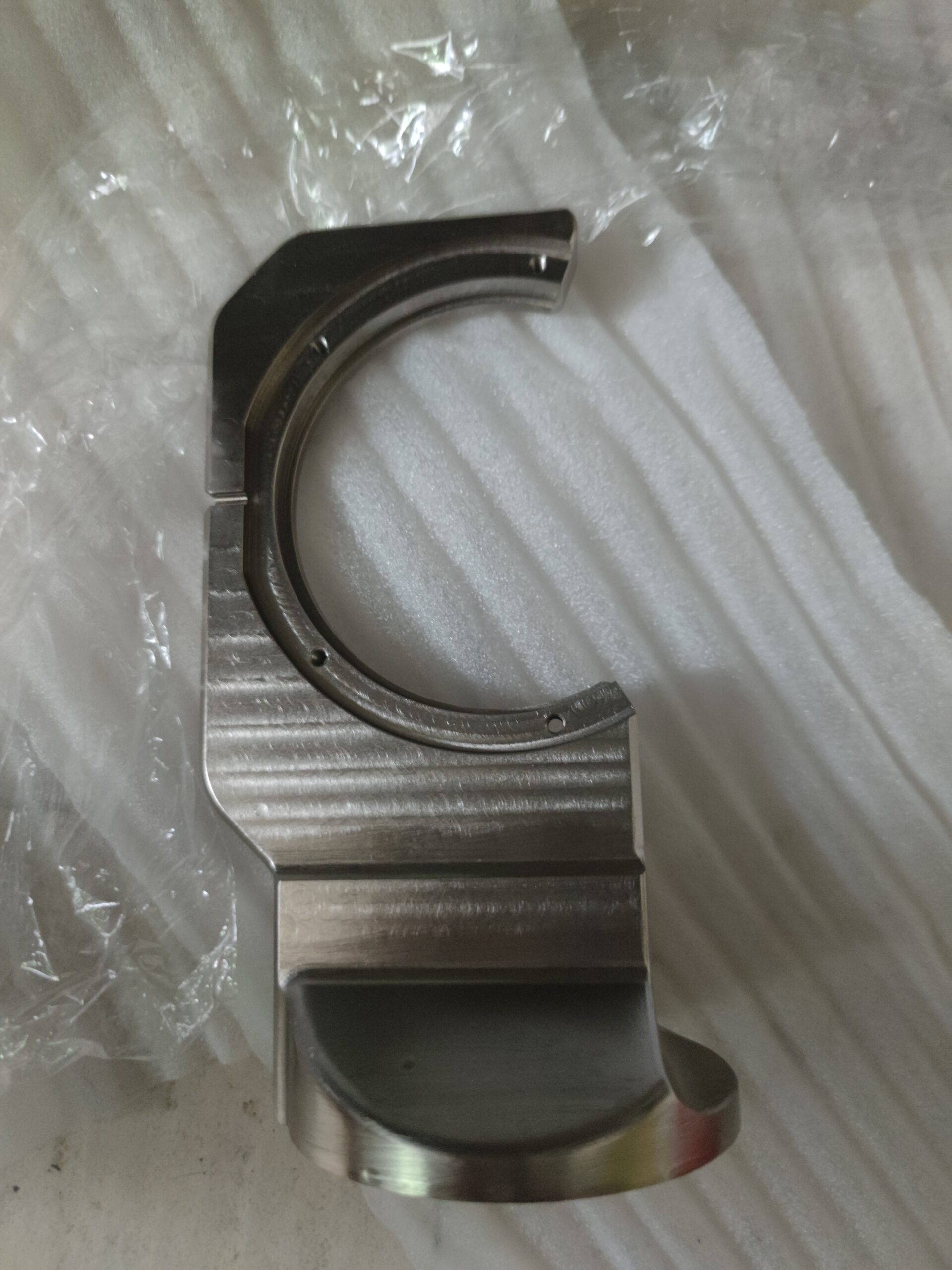
1. Machining Establishes the Geometry
Machining produces the drawing-defined surfaces, hole locations and threads. Critical fits need dimensional inspection, and coating allowances must be considered before machining is completed. Where a casting is used, sufficient machining stock and a sound surface are important.
2. Polishing Addresses Surface Roughness
Ra 2.5 μm is an arithmetic-average surface roughness requirement, not a promise of a mirror finish. The drawing should identify which surfaces require it, how they will be measured, and whether the requirement applies before plating or to the final plated surface.
Polishing must preserve edges, hole geometry and mating dimensions. A shiny appearance alone is not evidence that a roughness requirement has been achieved.
3. ENP Adds a Functional Coating
Electroless nickel plating deposits nickel through a controlled chemical reaction rather than an externally applied electrical current. A suitable ENP system can improve corrosion and wear resistance and provide relatively uniform coverage on complex shapes. Actual results depend on substrate condition, cleaning, activation, coating chemistry and thickness.
ENP does not turn ductile iron into stainless steel or repair an unsound casting. For this case, coating thickness, phosphorus content, hardness and corrosion-test results have not been specified here; they should be agreed separately when required.
Coating also changes size. As a simple example, a coating of thickness t on both opposing surfaces increases an external diameter by approximately 2t and reduces a bore diameter by approximately 2t. Masking, thread allowances and final inspection should therefore be defined for precision features.
Common Ductile Iron Applications
Appropriate grades are used for machinery housings, brackets, gears, pump bodies and valve components. The relevant grade depends on load, stiffness, impact, wear, temperature and environment. A general-purpose machined bracket and a pressure-containing casting can require very different acceptance criteria.
What to Include on a Ductile Iron Drawing
- Material grade, governing standard and any required heat treatment or certification.
- Critical dimensions, tolerances, datum structure and inspection requirements.
- Surface roughness values with clearly identified surfaces and measurement stage.
- ENP specification, coating thickness, masking areas and any post-treatment.
- Final inspection requirements for plated fits, threads and mating surfaces.
Xproto can review the relationship between the material, CNC machining requirements and specified surface treatment. Send your drawing for a project-specific review.
Frequently Asked Questions
Is Ductile Iron the Same as Cast Iron?
Ductile iron is one type of cast iron. Its defining feature is spheroidal graphite, unlike the flake graphite in gray iron.
Does Ductile Iron Rust?
Yes. Ductile iron can corrode when exposed to moisture and oxygen. A suitable coating can improve protection, but coating selection and testing must match the environment.
Is QT500-7 Suitable for CNC Machining?
It can be machined into finished components. Tool selection and cutting conditions depend on actual hardness, material condition and the features being produced.
Does ENP Guarantee Ra 2.5 μm?
No. Coating and roughness are separate requirements. Substrate preparation influences the result, and the specified final surface needs measurement.
Can Ductile Iron Replace Steel Without Changing the Drawing?
Not automatically. The substitution can affect strength, stiffness, toughness, manufacturing and inspection. Obtain engineering approval and revise the material specification before production.