

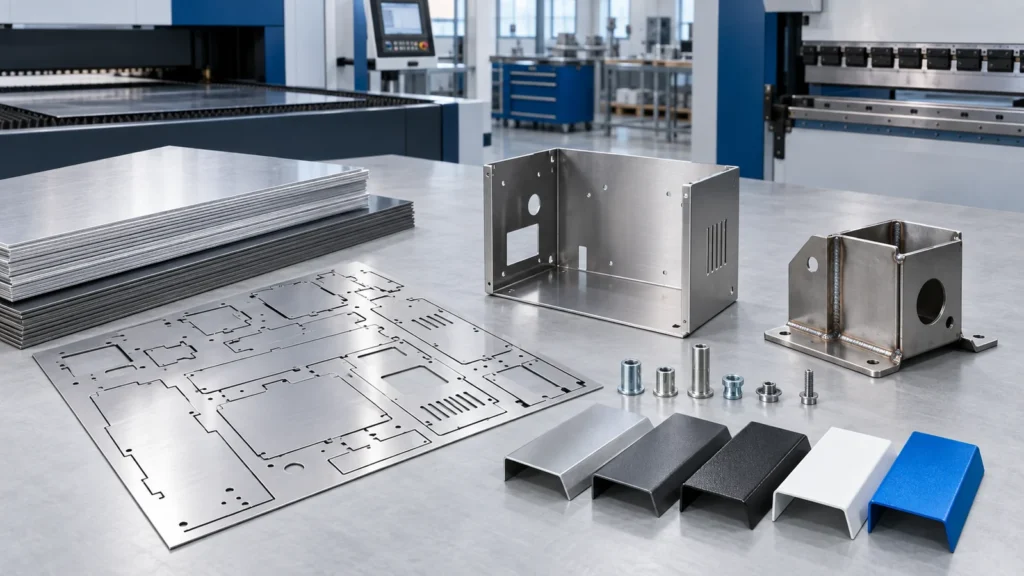
Sheet Metal Fabrication Cost: Pricing Factors and Ways to Save
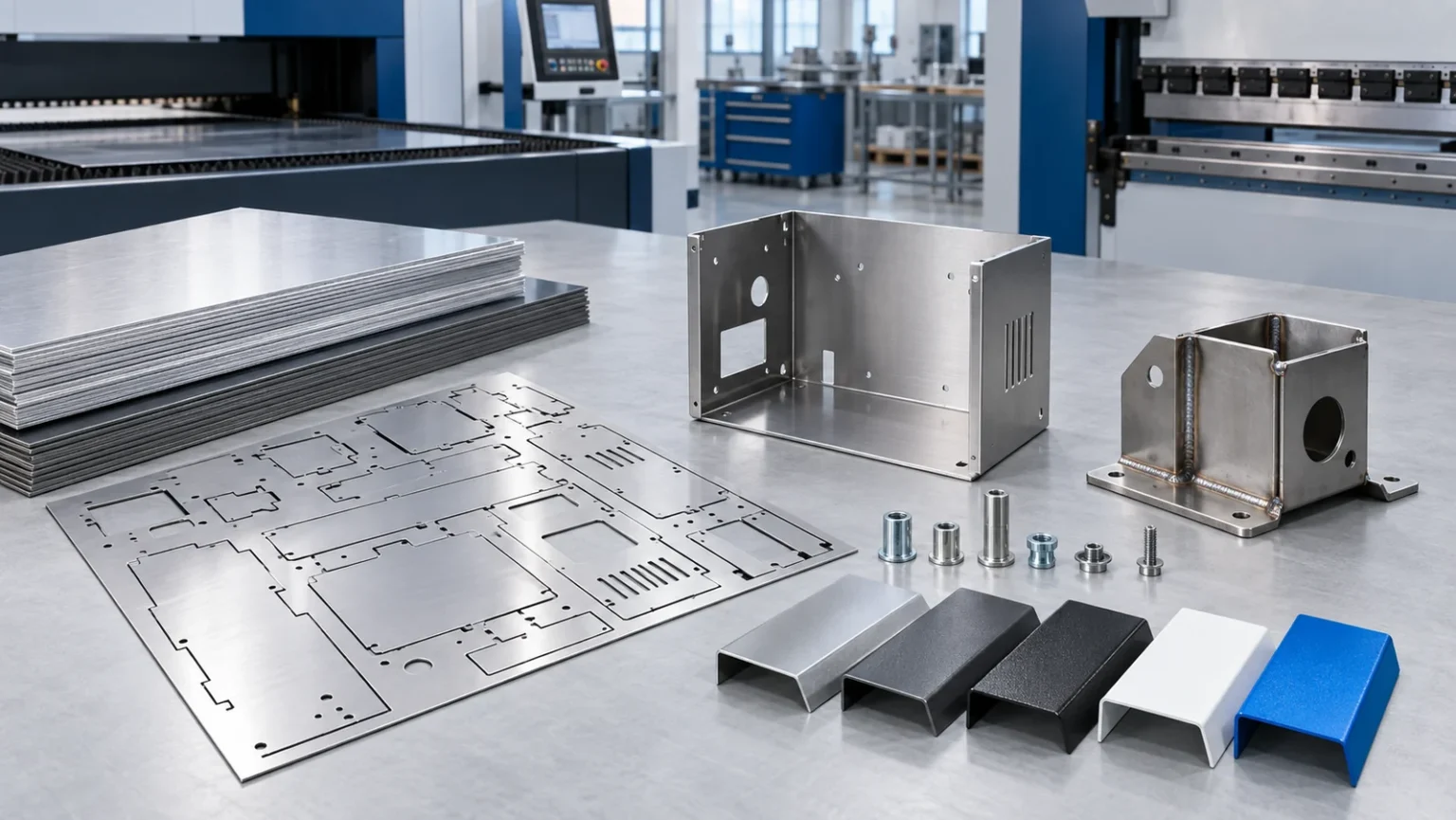
Short answer: sheet metal fabrication cost is determined by more than the price of the metal. A complete quotation normally includes material consumption, programming and setup, cutting time, bending operations, hardware, welding or assembly, surface finishing, inspection, packaging, and delivery. Quantity then changes how setup and tooling costs are distributed across each part.
The cost of sheet metal fabrication cannot be reduced to one reliable universal price per kilogram or price per bend. A simple flat bracket and a welded cosmetic enclosure may use the same alloy and thickness but have very different production costs. A dependable sheet metal fabrication cost estimate must account for both one-time setup work and the operations repeated on every part. This guide explains what suppliers evaluate, how to compare quotations fairly, and which design decisions can lower cost without weakening the part.
Sheet Metal Fabrication Cost at a Glance
| Cost component | What affects it | Information needed for a quote |
|---|---|---|
| Material | Alloy, temper, thickness, sheet size, market price, minimum purchase | Material specification and acceptable alternatives |
| Material utilization | Part outline, nesting efficiency, grain direction, edge allowance, scrap | Flat pattern or accurate 3D CAD model |
| Cutting | Cut length, pierces, small features, thickness, laser or punching method | CAD geometry and edge-quality requirements |
| Forming | Number of bends, bend direction, tool changes, part handling, special forms | Bend geometry, radii, angles, and critical dimensions |
| Joining | Weld length, weld type, fixturing, distortion control, grinding, riveting | Assembly drawing and weld symbols |
| Hardware | Fastener type, installation access, quantity, insertion operation | Hardware standard and installation locations |
| Finish | Coating type, color, masking, cosmetic class, batch minimum | Finish specification and marked cosmetic surfaces |
| Quality | Tolerances, inspection method, reports, sampling plan, certifications | 2D drawing and inspection requirements |
| Order quantity | Setup amortization, purchasing volume, nesting, production scheduling | Prototype, launch, and annual quantities |
Sheet Metal Fabrication Cost Calculation Formula
A useful estimating model separates one-time or batch-level work from costs that repeat for every part:
Total order cost = material + setup and programming + cutting + forming + joining + hardware + finishing + inspection + packaging and freight.
Estimated unit cost = batch setup divided by quantity + variable cost per part.
This explains why the first prototype is usually more expensive than the hundredth identical part. CAD review, programming, machine setup, tooling preparation, and first-piece inspection are required even for a one-part order. At a higher quantity, those activities are shared across more units. The variable portion still remains, so unit cost does not decrease indefinitely.
Illustrative cost estimate for a 100-piece batch
Assume a 100-part order has the following estimated costs. These figures illustrate the calculation method only; they are not a quotation or a universal market price.
| Example cost item | Illustrative batch cost |
|---|---|
| Material and expected scrap | US$280 |
| Programming and machine setup | US$180 |
| Cutting and forming | US$320 |
| Hardware and joining | US$260 |
| Finishing, inspection, and packaging | US$210 |
| Total order cost | US$1,250 |
| Estimated cost per part | US$12.50 |
The same part ordered in a smaller batch would carry a larger share of the US$180 setup cost. A different alloy, tighter tolerance, cosmetic finish, or more complex bend sequence would also change the result. Use the formula to compare cost drivers, then obtain a CAD-based sheet metal fabrication quote for an actual project.
10 Factors That Drive Sheet Metal Fabrication Pricing
1. Material grade and thickness
Material selection affects raw stock price, cutting speed, bendability, welding behavior, corrosion resistance, and finishing. Aluminum, low-carbon steel, stainless steel, copper, and brass do not cost the same and may require different process settings. Even within one material family, alloy, temper, thickness, surface condition, and certification can change availability and price.
Choose the material around the real operating requirement. If strength, corrosion resistance, conductivity, appearance, or temperature capability is essential, specify it clearly. If several grades are acceptable, tell the supplier. An approved alternative that is already stocked can reduce minimum-purchase cost and lead time.
2. Sheet utilization and nesting efficiency
A supplier pays for the sheet area consumed, not only the finished part weight. Irregular outlines, long narrow shapes, required grain direction, large edge margins, and low quantities can leave unusable material between parts. Good nesting places multiple flat patterns efficiently while maintaining the separation required by the cutting process.
Material utilization is especially important for expensive alloys and thick sheet. Small geometry changes, common thicknesses across an assembly, or combining compatible parts in one production batch can improve yield. Do not reduce spacing or rotate grain-sensitive parts without an engineering review, because the cheapest nest is not always the most reliable forming plan.
3. Cutting length and number of pierces
Laser cutting, punching, waterjet cutting, and shearing have different economics. For laser-cut parts, quotation software considers total cut length, the number of starts or pierces, material type, thickness, and required edge quality. A part with many slots, perforations, and small holes can take much longer than a similarly sized part with a simple perimeter.
Very small holes relative to thickness, narrow webs, dense vent patterns, and tight corner requirements may need slower parameters or secondary operations. When a repeated hole pattern is needed at production volume, punching may be economical. For prototypes and complex outlines, laser cutting often avoids dedicated tooling.
4. Bend count, direction, and setup changes
Each bend adds machine time and handling. Cost rises faster when the operator must rotate or flip a large part, change punches and dies, form short return flanges, or follow a difficult bend sequence. Bends that cannot be reached with standard press-brake tooling may require special tools or a redesigned part.
Use consistent inside bend radii when the design allows it. Keeping several bends compatible with one tool setup can reduce changeover time. Adequate flange length, bend relief, hole-to-bend distance, and tool access also prevent rework and make the quotation more predictable.
5. Welding and distortion control
Welding can be one of the largest labor components in a sheet metal assembly. The quotation may include joint preparation, fixturing, tack welding, final welding, distortion correction, grinding, blending, and inspection. Long continuous cosmetic welds normally require more time than short functional welds.
Ask whether tabs, slots, self-locating joints, rivets, screws, or clinching hardware can replace part of the welding. Where a continuous weld is not needed for sealing or strength, an approved stitch-weld pattern may reduce heat input and finishing work. Any change to a structural or pressure-containing joint must be reviewed by the responsible engineer.
6. Hardware and assembly
PEM-style fasteners, rivet nuts, studs, hinges, latches, and purchased components add both material and installation cost. The operation becomes more difficult when access is limited or hardware is close to an edge, bend, or another fastener. Mixed hardware increases picking and quality-control effort.
Standardize hardware across related parts where practical. Show the exact manufacturer or standard, size, orientation, and installation side on the drawing. This prevents quotation assumptions and helps the supplier plan insertion before features become inaccessible.
7. Surface finishing and cosmetic requirements
Powder coating, anodizing, plating, passivation, brushing, bead blasting, painting, and printing can improve appearance or performance, but each adds process steps. Cost is influenced by part size, rack or contact points, masking, surface preparation, color availability, batch minimums, and inspection standards.
Custom colors and multi-stage finishes generally cost more than stocked options. Mark cosmetic surfaces and define what is unacceptable instead of applying a premium appearance requirement to every face. When a drawing controls surface texture, use a measurable specification and reference a clear surface roughness chart. Also identify areas that must remain conductive, threaded, grounded, or dimensionally unchanged so masking can be quoted correctly.
8. Tolerances and inspection
Tight tolerances can require slower processing, dedicated fixtures, trial bends, extra measurements, or secondary machining. Sheet metal also changes during forming and welding, so a tolerance that is easy on a flat laser-cut feature may be expensive across multiple bends.
Apply tight limits only to dimensions that control fit or function. Use a 2D drawing to identify critical features, datums, measurement conditions, and any required reports. A clear inspection plan is usually less expensive than a vague instruction such as “all dimensions critical.”
9. Quantity and repeat demand
Higher quantities can reduce unit cost through better sheet purchasing, nesting, setup amortization, and production scheduling. However, the most economical process can change as volume increases. A prototype may be laser cut and press-brake formed, while a mature high-volume part may justify stamping, dedicated fixtures, or automated welding.
Request pricing at realistic breakpoints rather than an inflated annual forecast. Providing a prototype quantity, launch quantity, and expected annual demand allows the supplier to show where tooling or process changes become worthwhile.
10. Packaging, freight, and delivery schedule
Large enclosures and delicate cosmetic parts may require custom foam, protective film, dividers, or individual bags. Expedited freight and split deliveries can outweigh small manufacturing savings. Parts with thin flanges or finished faces also need packaging that prevents deformation and rubbing during transit.
State the delivery destination, requested date, packaging standard, and whether partial shipments are useful. A realistic schedule gives the supplier more flexibility to combine material purchasing and finishing batches.
How a Supplier Builds a Sheet Metal Fabrication Quote
A capable fabricator normally reviews the 3D model and drawing before committing to price. The estimator develops or verifies the flat pattern, selects a stock sheet and cutting method, plans the bend sequence, identifies hardware and joining operations, and routes the part through finishing and inspection.
- CAD and revision review: confirm that the model, drawing, and bill of materials describe the same revision.
- Material planning: select stock size, thickness, grain direction, and nesting strategy.
- Process routing: define cutting, deburring, bending, hardware, welding, finishing, and inspection operations.
- Time estimation: calculate setup time, run time, handling, and outside-process lead time.
- Risk review: identify special tooling, distortion, cosmetic, tolerance, or supply-chain risks.
- Quantity pricing: distribute batch-level costs and evaluate volume-appropriate processes.
This is why a detailed CAD package produces a more reliable price than a photo, sketch, or overall dimensions alone. Xproto can review files for custom sheet metal fabrication and identify cost-sensitive features before production.
Example: Why Two Similar Enclosures Can Have Different Costs
Consider two enclosures made from the same stainless steel thickness. Enclosure A has a simple laser-cut blank, four accessible bends, standard hardware, and a brushed finish. Enclosure B has dense ventilation holes, short return flanges, several tool changes, internal studs, welded corners, ground cosmetic seams, masked threads, and a custom powder color.
The finished size and material weight may be similar, but Enclosure B requires more cutting starts, forming setups, assembly labor, finishing preparation, masking, and inspection. Comparing quotations only by weight would miss most of the real cost. The best reduction opportunity is therefore often process simplification rather than a cheaper alloy.
12 Sheet Metal Fabrication Cost Reduction Strategies
- Use stocked materials and standard thicknesses when performance permits.
- Standardize thickness across related components to improve purchasing and nesting.
- Reduce unnecessary holes, slots, and decorative cutouts.
- Use consistent bend radii that match available tooling.
- Provide adequate flange length and bend relief.
- Design bends so the part can be formed with fewer flips and tool changes.
- Replace nonessential continuous welds with approved intermittent joining.
- Use tabs, slots, and self-locating features to reduce fixture and assembly time.
- Standardize fasteners and ensure installation access.
- Apply tight tolerances only to functional interfaces.
- Choose stocked finish colors and clearly mark cosmetic surfaces.
- Request quantity break pricing before committing to dedicated tooling.
Cost reduction should never be separated from function. Changes to material, wall thickness, joints, tolerances, or finish need approval based on load, environment, appearance, compliance, and product life.
What to Send for an Accurate Sheet Metal Quote
- A native 3D CAD file such as STEP, including the current revision.
- A 2D drawing for tolerances, datums, threads, welds, and special notes.
- Material grade, temper, thickness, and acceptable alternatives.
- Required finish, color reference, texture, gloss, masking, and cosmetic surfaces.
- Hardware list with manufacturer or standard part numbers.
- Prototype quantity, production quantity, and expected repeat demand.
- Inspection reports, certificates, traceability, or packaging requirements.
- Delivery destination and required schedule.
When some details are still open, label them as preferences rather than mandatory specifications. That gives the manufacturing engineer room to recommend lower-cost alternatives without changing critical design intent.
Prototype Cost vs Production Cost
Prototype work prioritizes speed, flexibility, and design learning. Laser cutting and press-brake forming can avoid dedicated tooling, but programming, setup, and first-piece inspection are concentrated into a small quantity. Unit cost is therefore higher.
Production work can justify fixtures, multi-part nests, repeatable hardware insertion, optimized packaging, and sometimes stamping or automated joining. These investments increase preparation cost but reduce repeated labor. Before selecting production tooling, confirm that the design and demand are stable enough to recover the investment.
Frequently Asked Questions
How much does sheet metal fabrication cost per part?
There is no dependable universal price. Part cost depends on material, thickness, sheet utilization, cut complexity, bends, welding, hardware, finish, tolerances, inspection, quantity, and delivery. A CAD-based quotation is the reliable way to price a specific design.
How do I create a sheet metal fabrication cost estimate?
Start with material consumption and expected scrap, then add programming and setup, cutting, forming, hardware, joining, finishing, inspection, packaging, and freight. Divide batch-level costs by the order quantity and add the variable cost per part. The final cost of sheet metal fabrication should be confirmed from the actual CAD model, drawing, quantity, finish, and delivery requirements.
What usually makes a sheet metal part expensive?
Common cost drivers include expensive or non-stock material, inefficient nesting, many small cut features, repeated press-brake setups, inaccessible bends, extensive welding and grinding, custom finishing, tight tolerances, and low order quantity.
Does a heavier part always cost more?
No. Weight affects material and freight, but process complexity can be more important. A light enclosure with many bends, welds, fasteners, and cosmetic requirements may cost more than a heavier simple bracket.
Does ordering more parts reduce the unit cost?
Usually, because programming, setup, purchasing, and first-piece inspection are spread across more units. The reduction depends on which costs are fixed and which repeat for every part. Request quantity-break pricing to see the actual curve.
Is laser cutting or punching cheaper?
It depends on geometry and volume. Laser cutting is flexible for prototypes and complex outlines without dedicated tools. Punching can be efficient for repeated standard features and production quantities. A supplier should compare both routes using the actual flat pattern.
Can a supplier reduce cost without changing the design?
Sometimes. Better nesting, standard stock, combined purchasing, optimized routing, and batch finishing may lower cost without changing geometry. Larger savings often require approved adjustments to features, tolerances, joints, or finish.
Get a Project-Specific Cost Review
A useful quotation should explain the manufacturing route and identify the specifications that have the greatest cost impact. Send Xproto your CAD model, drawing, quantities, and finish requirements for a practical DFM and pricing review.